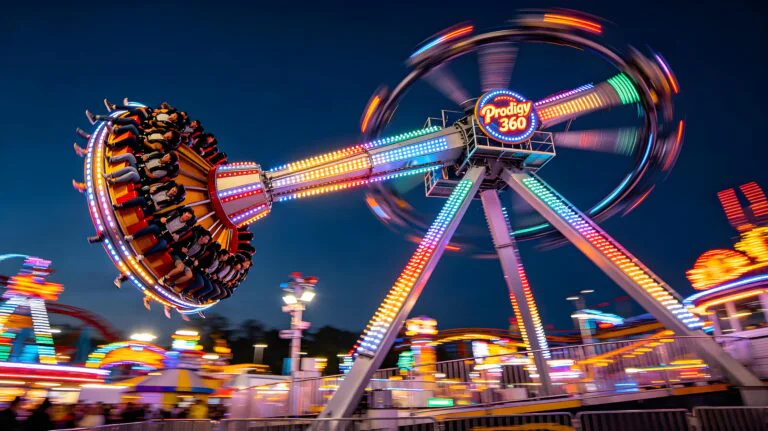
When investing in or operating carnival rides, safety is the single most important consideration. For park owners, carnival operators, and family entertainment centers evaluating equipment from Zhengzhou Prodigy Amusement Equipment Co., Ltd. (often marketed as “Prodigy Rides”), the question “how safe are Prodigy carnival rides” deserves a thorough, evidence-based answer. This article examines Prodigy’s safety credentials, relevant industry standards, regulatory compliance, and the factors that ultimately determine ride safety—regardless of manufacturer.

Who Is Prodigy Rides? Understanding the Manufacturer
Zhengzhou Prodigy Amusement Equipment Co., Ltd. is a Chinese amusement equipment manufacturer founded on May 28, 2008, with a founding team that began developing amusement solutions in 1999. The company describes itself as “a dynamic private technology‑based enterprise” specializing in the R&D, design, manufacturing, and sale of amusement equipment, including ferris wheels, drop towers, roller coasters, spinning rides, pirate ships, and interactive play attractions.
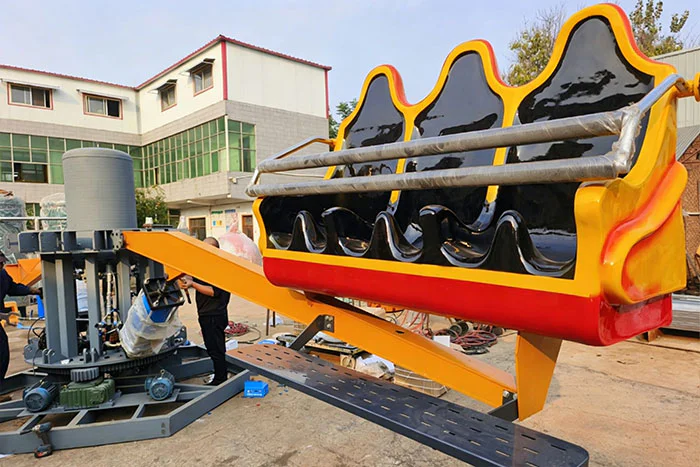
Prodigy Rides operates from a 55,000‑square‑meter production facility and holds 70 patents. The company is a member of the International Association of Amusement Parks and Attractions (IAAPA) , a global trade association representing the attractions industry worldwide.

It is important to note that no publicly documented ride‑related accidents, major injuries, or product recalls have been associated specifically with Prodigy carnival rides. The search results revealed no reports linking Prodigy equipment to any amusement ride incidents. Additionally, the company’s name has not appeared in recall databases for amusement equipment, distinguishing it from many competitors in the portable carnival ride space.
Industry‑Wide Safety Statistics: Putting Risk in Perspective
Before evaluating any specific manufacturer, understanding baseline industry safety statistics provides essential context. According to the International Association of Amusement Parks and Attractions (IAAPA) , the chance of being seriously injured on a fixed‑site amusement ride at a U.S. park is approximately 1 in 15.5 million rides taken. For comparison, approximately 40,000 people die annually in traffic‑related incidents on U.S. roads.
However, several important caveats apply:
- Portable rides face unique risks: Carnival rides that are repeatedly disassembled, transported, and reassembled are subject to cumulative structural stress from highway transport, which accelerates metal fatigue—the progressive weakening of steel through repeated stress cycles.
- Children are most at risk: A study by Nationwide Children’s Hospital shows amusement ride injuries are most common among children, with kids under age 5 being the most likely to be injured.
- Injury rates are decreasing: The Risk Index Factor (RIF) for amusement devices declined in 2025, with a recorded value of 0.06 Fatality Equivalent per million people per year—and importantly, the RIF has been declining since 2021.
These statistics provide the industry backdrop against which Prodigy rides must be assessed.
Prodigy’s Safety Certifications and Quality Credentials
ISO 9001 Quality Management Certification
Prodigy has successfully passed ISO 9001 international quality system certification. ISO 9001 is a management system certificate that governs how an organization repeatedly designs, builds, and supports products to a consistent standard—in contrast to product‑specific certifications that merely verify a single product’s compliance. ISO 9001 establishes baseline quality management processes that make achieving technical standard compliance much faster and more reliable.
ISO Environmental Management Certification
Prodigy also holds ISO environmental management certification, indicating that the company follows recognized protocols for environmentally responsible manufacturing practices.
CE Certification
Prodigy has obtained CE certification for its products. CE marking is a mandatory conformity mark for products sold within the European Economic Area (EEA). For amusement equipment, CE certification requires compliance with relevant EU directives, including the Machinery Directive (2006/42/EC) and the specific directive for amusement rides (2014/33/EU), as well as alignment with EN 13814—the European safety standard for amusement rides.
IAAPA Membership
Prodigy’s membership in IAAPA demonstrates commitment to global industry best practices and professional operation. IAAPA members gain access to safety resources, industry networking, and ongoing education about emerging safety standards.
Industry Awards
The company has reportedly won the China Amusement Product Quality Award and the China Amusement Equipment Products Innovation Award, though specific dates and awarding bodies are not specified in publicly available sources.
What Certifications Should You Look For?
When purchasing any carnival ride—whether from Prodigy or any other manufacturer—the following certifications are essential to verify:
| Certification | Jurisdiction / Purpose | Importance |
|---|---|---|
| CE Marking + EN 13814 | European market; safety of design, manufacture, installation, operation | EN 13814-1:2019+A1:2024 is the current standard; requires documented fatigue assessment proving a minimum 35,000‑hour operational life |
| ASTM F24 Series | North American market; design, operation, inspection, maintenance | ASTM F2291‑2024 is the current standard for design criteria; ASTM recently approved a new risk assessment standard in November 2025 |
| ISO 9001 | Global; quality management systems | Demonstrates consistent manufacturing processes |
| State/Provincial Permits | Local regulatory compliance | Many U.S. states require annual inspection certificates for any ride set up and operated within the state |
Prodigy is known to hold ISO 9001 and CE certifications, but buyers should request specific certification documentation for the exact model being purchased, as certification status can vary by product line and manufacturing date.
The Critical Difference: Manufacturer Quality vs. Operational Safety
Perhaps the most important fact about ride safety is this: even the most perfectly manufactured ride can become unsafe through improper assembly, inadequate maintenance, or poorly trained operators. Conversely, rides with less perfect manufacturing can remain safe through rigorous operational protocols.
Portable Ride Specific Risks
Portable carnival rides, including those manufactured by Prodigy, face risks that fixed‑site installations do not. As the U.S. Consumer Product Safety Commission (CPSC) notes, the agency has jurisdiction only over mobile amusement rides—those transported from location to location as part of fairs, carnivals, parties, or other events. CPSC works on voluntary safety standards for mobile amusement rides through the Council for Amusement & Recreational Equipment Safety (CARES) , the National Association of Amusement Ride Safety Officials (NAARSO) , and the Outdoor Amusement Business Association (OABA) .
Key portable‑ride risks include:
- Transport fatigue: Repeated vibration (typically 5–25 Hz) during highway transport accelerates metal fatigue at weld joints and connection points.
- Assembly errors: Each disassembly and reassembly introduces opportunities for improper connection, missing fasteners, or damaged components.
- Inconsistent inspection: While some states inspect mobile rides each time they are disassembled and reassembled, others require only annual inspections.
- Environmental exposure: Portable rides face more varied operating environments, from muddy fairgrounds to dusty parking lots.
The Operator Factor
Even the best‑manufactured ride—including those from Prodigy—is only as safe as the people operating it. A 2025 incident in British Columbia, Canada, illustrates this vividly: a person was left with broken bones after falling from a carnival ride operated with the help of a nine‑year‑old child. The owner’s son was helping unload and load riders without proper training or supervision.
How to Ensure Prodigy Rides Are Safe: A Buyer’s Checklist
For operators considering Prodigy carnival rides, the following steps help ensure safe operation:
Before Purchase
- Verify certifications: Request ISO 9001, CE certification numbers, EN 13814 compliance documentation, and any ASTM certifications claimed. A transparent manufacturer will readily provide these documents.
- Request factory testing records: Prodigy reportedly performs pre‑shipment testing on each ride before packing. Ask for test reports.
- Conduct a factory visit: Inspect production facilities, welding quality, and quality control processes firsthand.
- Check IAAPA membership status: Verify current IAAPA membership through IAAPA’s member directory.
During Operation
- Establish rigorous inspection protocols: According to industry best practices, daily pre‑operational inspections must include visual checks of electrical wiring, welds, articulations, bearings, and driving shafts.
- Require certified operator training: Operators should complete training through programs such as NAARSO certification. They must be familiar with the device, able to follow safe operating procedures, and able to give clear instructions to patrons.
- Maintain detailed logs: Document all daily inspections, maintenance activities, and any unusual ride behavior.
- Enforce rider restrictions: Pay attention to height and weight requirements, posted rules, and ensure riders remain seated throughout the ride.
- Plan for weather: Monitor wind conditions; do not operate rides if wind velocity exceeds the manufacturer’s recommended maximum safe operating wind speed.
Comparing Prodigy to Other Manufacturers
Prodigy competes with numerous Chinese amusement equipment manufacturers, including Wenzhou Kidsplayplay Toy Co., Ltd. , Zhejiang Juma Entertainment, Guangdong Jinma Entertainment (a publicly traded company with EN and ASTM certification), and Western manufacturers such as Wisdom Rides (USA).
Prodigy’s certifications (ISO 9001, ISO 14001, CE) place it in the mid‑tier of Chinese manufacturers—credentialed but not at the highest tier of Western certification (e.g., full ASTM compliance for all models). However, no publicly documented safety incidents differentiate Prodigy from manufacturers with known accident histories.
Buyers should note that Prodigy has been manufacturing amusement equipment for over 25 years (including the founding team‘s experience before 2008), which provides significant operational experience that newer manufacturers lack.
Red Flags to Watch For
Regardless of manufacturer, be wary of the following warning signs:
- Unverifiable certifications: Manufacturers who cannot produce certificate numbers and original test reports.
- No documented fatigue assessment: EN 13814 requires a documented fatigue assessment proving a minimum 35,000‑hour operational life.
- Unwillingness to provide references: Reputable manufacturers should provide contact information for existing customers.
- Excessively low prices: Rides priced substantially below market averages often compromise on materials or skip essential safety testing.
Frequently Asked Questions (FAQ)
Q: Has a Prodigy carnival ride ever had a documented accident or injury?
A: Based on available search results (May 2026), no publicly documented ride‑related accidents, major injuries, or product recalls have been specifically associated with Prodigy carnival rides. The company’s name does not appear in amusement ride incident reports or recall databases. However, buyers should independently verify safety records by requesting incident history directly from the manufacturer.
Q: Are Prodigy rides safer than other Chinese amusement equipment?
A: Prodigy holds ISO 9001, ISO environmental, and CE certifications—placing it in the credentialed tier of Chinese manufacturers. The company has over 25 years of combined manufacturing experience, 70 patents, and IAAPA membership. While specific comparative safety data is not publicly available, Prodigy’s certifications, industry awards, and lack of documented safety incidents are positive indicators.
Q: Do Prodigy rides meet U.S. ASTM safety standards?
A: This varies by model and configuration. Buyers targeting the U.S. market should specifically request ASTM F2291‑2024 compliance documentation for the exact model being purchased. Not all Chinese manufacturers offer ASTM certification on all models.
Q: What is the most common cause of carnival ride injuries?
A: According to injury data, most carnival ride injuries stem from operator error, poor maintenance, or rider behavior rather than inherent manufacturing defects. Children under age 5 are most likely to be injured, often due to improper restraint use or failing to remain seated. Complete mechanical failure causing serious injury is statistically extremely rare—approximately 1 in 15.5 million rides.
Q: How often should Prodigy carnival rides be inspected?
A: Daily pre‑operational visual inspections are essential. Many U.S. states require annual inspections by certified third‑party inspectors. For portable rides, some states require inspection each time the ride is disassembled and reassembled for use. Always follow Prodigy’s specific maintenance and inspection schedule as documented in the ride manual.
Q: Does Prodigy provide operator training?
A: Contact Prodigy directly (via their IAAPA member listing or official website) to inquire about training availability. Reputable manufacturers typically provide on‑site operator training during installation and commissioning.
The Verdict: How Safe Are Prodigy Carnival Rides?
Based on the available evidence as of May 2026:
Positive indicators:
- No documented ride‑related accidents or product recalls associated with the Prodigy name
- ISO 9001 quality management certification
- CE certification with compliance to EU standards
- IAAPA membership demonstrating industry commitment
- 70 patents reflecting engineering capability
- Over 25 years of combined manufacturing experience
- Industry awards for product quality and innovation
Considerations:
- Actual ride safety depends more on operator competence and maintenance discipline than on manufacturer choice alone
- Portable rides inherently face greater safety risks than fixed‑site installations
- Prodigy is not a top‑tier Western manufacturer (e.g., ASTM certification may be model‑dependent)
- Limited independent third‑party reviews from park operators are publicly available
Final Verdict
Prodigy carnival rides appear to be reasonably safe when purchased from the manufacturer, properly installed, rigorously maintained, and operated by trained personnel. The company holds recognized certifications, belongs to industry associations, and has no documented accident history. However, as with any amusement equipment—especially portable carnival rides—the ultimate safety of Prodigy rides depends overwhelmingly on the operator‘s commitment to daily inspections, proper maintenance, and trained operator supervision.
For buyers seeking maximum assurance, verify all certifications, conduct a factory visit, require documented fatigue assessments (for EN 13814 compliance), and implement industry‑standard inspection protocols. For operators already using Prodigy equipment, rigorous daily inspections and trained operators remain the most important safety measures.