


The portable trailer ride has already transformed how we experience amusement — turning parking lots into midways, backyards into carnivals, and street festivals into mini theme parks. But as we look ahead, this mobile marvel is poised for an even more radical evolution. Driven by technology, sustainability demands, and a culture hungry for on-demand, Instagrammable moments, the future of portable trailer rides will reshape not just carnivals, but the entire entertainment landscape.
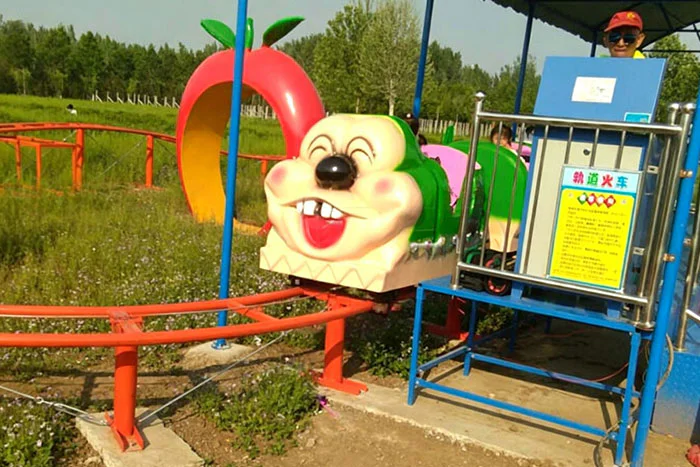
Let’s explore the trends, innovations, and market shifts that will define the next generation of trailer-mounted amusement.
1. Electric Power and Green Transformation
The roar of diesel generators has long been the soundtrack of traveling amusement. That’s about to change. The portable trailer ride of the future will be increasingly electric — and potentially emission-free on site.

Battery-powered rides are already entering the market. Improved lithium-ion battery packs can now store enough energy to run a family-sized ride for an entire event day. These systems charge overnight from standard grid power or even portable solar arrays. Benefits include:
- Noise reduction: Ultra-quiet operation makes rides welcome in sound-sensitive neighborhoods and upscale events.
- Indoor use potential: Without exhaust fumes, battery-powered rides can operate inside convention centers, malls, and exhibition halls — opening a huge new market segment.
- Lower fuel costs and carbon footprint: Operators save on diesel and demonstrate environmental responsibility, a growing requirement for municipal contracts and corporate clients.
Some manufacturers are experimenting with solar-assisted trailer rides, where photovoltaic panels built into the trailer’s roof or awnings trickle-charge batteries during daylight operation. While solar alone can’t yet power a thrill ride continuously, it significantly extends runtime and reduces generator dependency.
The coming decade will likely see plug-in hybrid systems become standard: electric motors for the ride cycle, with a compact, high-efficiency generator that only kicks in when battery levels drop below a threshold. This shift aligns the portable amusement industry with the broader electrification of commercial transport, including the electric semi-trucks that will tow these rides.
2. Smarter Rides Through Digital Technology
The portable trailer ride of tomorrow won’t just spin — it will think.
IoT-enabled predictive maintenance will replace reactive repair. Sensors embedded in critical components — bearings, hydraulic cylinders, restraint locks — will stream data to the cloud. Artificial intelligence will analyze this data to predict when a part is likely to fail, alerting the operator to schedule maintenance before a breakdown disrupts an event. This increases uptime and dramatically enhances safety.
Programmable ride experiences will allow a single trailer ride to offer multiple “ride profiles.” A spinning tea cup ride could switch from a gentle, toddler-friendly mode during the afternoon to a faster, more thrilling cycle in the evening — all controlled from a tablet interface. Operators will sell tiered experiences, maximizing revenue from the same hardware.
Real-time transparency for customers and regulators: Through a simple QR code on the ride, event organizers or parents could view the ride’s current inspection status, daily safety check log, and operator credentials. This level of openness will become a competitive differentiator and a potential regulatory requirement.
3. Immersive and Hybrid Experiences: Blending Physical and Virtual
Perhaps the most exciting frontier is the fusion of physical trailer rides with virtual and augmented reality.
Imagine a portable trailer-mounted swing ride where each passenger wears lightweight, sanitized VR goggles. As the ride spins and tilts, the virtual environment transforms the sensation entirely — one cycle might simulate flying over a fantasy city, another through a prehistoric jungle with dinosaurs. The ride hardware doesn’t change, but the experience becomes infinitely variable and updateable via software.
AR, on the other hand, can enhance the physical world. Point a smartphone app at a spinning ride at night, and the screen overlays sparkling special effects, animated characters, and interactive game elements. This creates a second layer of entertainment that spectators can enjoy even when they’re not on the ride, amplifying social media sharing and brand visibility.
Gamification will also become embedded. Riders might collect points for consecutive rides, unlock special lighting sequences, or compete against other riders in a virtual race — all managed through an app linked to the ride’s control system.
These immersive capabilities will attract a tech-savvy, experience-hungry demographic that expects more than just a mechanical spin. And because the core ride remains a portable trailer unit, these high-tech attractions can still travel to music festivals, esports events, and tech conferences.
4. Design Evolution: Sleek, Customizable, and Multi-Functional
The aesthetic of portable trailer rides is moving decisively away from “temporary carnival” toward “high-end event infrastructure.”
- Architectural design language: Manufacturers are working with industrial designers to create rides with clean lines, premium materials, and an appearance that complements upscale environments. Think matte finishes, warm LED lighting, and gondolas that look like boutique furniture.
- Modular branding skins: Trailer-mounted rides will feature quick-change graphic panels and programmable LED surfaces. A ride wrapped in a corporate client’s colors and logo on Saturday can be transformed into a whimsical fairy-tale theme for a school event on Sunday.
- Multi-functional footprints: The same trailer platform might serve as a ride by day and a mobile stage, DJ booth, or photo backdrop by night. Hydraulic systems that erect a rotating ride can also be designed to deploy other structures, maximizing the return on investment for the owner.
This design maturity will cement portable rides as a legitimate, year-round entertainment solution for the most demanding clients, from luxury wedding planners to Fortune 500 event managers.
5. The On-Demand, Pop-Up Economy Goes Mainstream
The future of entertainment is flexible and location-agnostic. Portable trailer rides are the ideal vehicle for this shift.
Micro-entertainment venues: Instead of traveling to a giant theme park, consumers will increasingly find a cluster of two or three portable rides, along with food trucks and live music, in a pop-up lot in their own neighborhood. This “carnival as a service” model can activate underused spaces — empty retail pads, park-and-ride lots, even closed-off streets — for a single weekend, then move on.
Subscription-based event companies may emerge, offering monthly “adventure boxes” to neighborhoods or corporate campuses, where a portable ride appears as part of a rotating lineup of curated experiences.
Disaster-resilient and remote deployment: Lightweight, self-contained trailer rides will be used for entertainment relief in underserved areas, from remote rural communities to post-disaster zones where morale-building activities are needed but permanent infrastructure is impossible.
6. Autonomous Setup and Transport (The Longer View)
Looking further ahead, the convergence of autonomous vehicle technology and robotic deployment will redefine what a “portable trailer ride” even means.
A self-driving semi-tractor could deliver a ride to a predetermined location, where the trailer autonomously levels itself, deploys stabilizing outriggers, unfolds the ride structure via hydraulics, runs a self-check sequence, and signals its readiness — all without a human operator on site. Safety oversight would be handled remotely via cameras and sensors, with an operator able to intervene or grant start permission from a central control hub.
While fully unattended public operation is far off due to safety regulations, remote supervision with limited on-site staff will reduce labor costs and enable deployment in areas where it’s hard to station personnel.
7. Global Expansion and Standardization
Portable trailer rides are already popular in North America, Europe, and parts of Asia. The future will see significant growth in the Middle East, Africa, and South America as urbanization, rising disposable incomes, and a growing appetite for western-style entertainment create new markets.
Crucially, international safety standards harmonization will accelerate cross-border trade and operation. A portable ride manufactured in Italy and certified to a globally recognized standard (building on the ASTM F2291 and EN 13814 frameworks) can be sold and deployed in multiple countries with minimal re-engineering. This lowers costs for operators and encourages innovation from manufacturers who now serve a worldwide customer base.
Frequently Asked Questions
Will portable trailer rides ever replace permanent amusement parks?
No, but they will complement them. Permanent parks offer scale and immersion that a single trailer cannot match. However, portable rides will become the backbone of a parallel, decentralized entertainment ecosystem — bringing the fun to places a park could never be built.
How will technology make portable rides safer in the future?
Continuous sensor monitoring, automated pre-operation system checks, and AI-driven predictive maintenance will catch potential failures before they become hazards. Biometric or contactless restraint monitoring could even detect if a passenger has improperly secured a seatbelt.
Are portable trailer rides becoming more eco-friendly?
Absolutely. The shift to electric power, solar assist, sustainable materials in construction, and reduced transport emissions through electric tow vehicles all point toward a much greener footprint.
Can I invest in a futuristic portable ride business now?
Yes, and starting now positions you to ride the wave of upcoming innovations. By building a business around a modern, well-maintained ride today, you can add electric kits, smart monitoring, and VR experiences as retrofit upgrades when they become widely available and affordable.
Conclusion
The portable trailer ride is no longer just a carnival staple; it’s a platform for innovation at the intersection of engineering, digital technology, and experiential design. The future promises rides that are cleaner, smarter, more immersive, and woven into the fabric of daily life — from neighborhood pop-ups to high-end corporate spectacles.
As the entertainment industry increasingly values flexibility, sustainability, and shareable experiences, the trailer-mounted ride is perfectly positioned to lead. The midway is going mobile, and the road ahead has never looked more exciting.


