

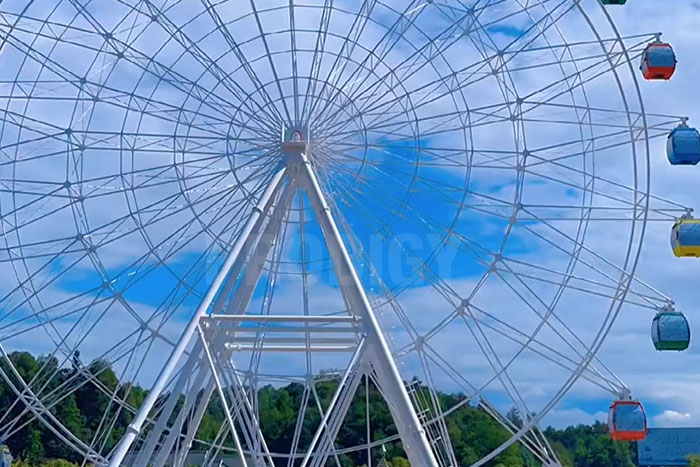
Ferris wheels have long been among the most iconic attractions in the amusement industry. From large theme parks and tourist destinations to traveling carnivals and community festivals, Ferris wheels continue to attract visitors of all ages.
Today, investors and amusement operators have two primary options: the mobile Ferris wheel and the traditional Ferris wheel. While both provide a memorable riding experience and strong visual appeal, they are designed for different business models and operational requirements.

What Is a Mobile Ferris Wheel?
A mobile Ferris wheel, also known as a portable Ferris wheel, is designed for transportation between multiple locations. These attractions are commonly mounted on trailers or built with modular structures that allow for quick assembly and dismantling.
Key Characteristics
- Trailer-mounted or portable design
- Easy transportation
- Fast setup and teardown
- Lower infrastructure requirements
- Suitable for traveling events
Mobile Ferris wheels are widely used at:
- Traveling carnivals
- County fairs
- Community festivals
- Tourism events
- Seasonal amusement parks
What Is a Traditional Ferris Wheel?
A traditional Ferris wheel is a permanent attraction installed at a fixed location. These structures are often larger and designed for long-term operation.
Common Locations
- Theme parks
- Tourist attractions
- Waterfront developments
- Entertainment complexes
- Observation centers
Traditional Ferris wheels typically require substantial infrastructure and long-term site commitments.
Mobile Ferris Wheel vs Traditional Ferris Wheel: Key Differences
1. Mobility and Flexibility
Mobile Ferris Wheel
The biggest advantage of a mobile Ferris wheel is flexibility.
Benefits include:
- Transportation between locations
- Participation in multiple events
- Seasonal deployment opportunities
- Greater business adaptability
Operators can generate revenue from numerous venues throughout the year.
Traditional Ferris Wheel
Traditional Ferris wheels remain fixed in one location.
Advantages include:
- Permanent attraction status
- Continuous operation
- Stable customer base
However, operators cannot relocate the ride to pursue new revenue opportunities.
Winner: Mobile Ferris Wheel
For businesses seeking flexibility and market reach, mobile Ferris wheels offer a significant advantage.
2. Initial Investment Cost
Mobile Ferris Wheel
Portable Ferris wheels generally require:
- Lower land investment
- Reduced infrastructure costs
- Simplified installation requirements
This makes them attractive for new investors and small-to-medium entertainment businesses.
Traditional Ferris Wheel
Permanent Ferris wheels typically involve:
- Higher construction costs
- Land acquisition expenses
- Foundation engineering
- Utility infrastructure
The total investment is usually much higher.
Winner: Mobile Ferris Wheel
For cost-conscious investors, mobile models offer a more accessible entry point.
3. Revenue Potential
Mobile Ferris Wheel
Revenue is generated through:
- Traveling carnivals
- Festivals
- Tourism events
- Seasonal operations
The ability to attend multiple events annually creates diverse income opportunities.
Traditional Ferris Wheel
Permanent Ferris wheels often benefit from:
- Daily operation
- Consistent visitor traffic
- Tourism-based revenue
Popular tourist locations can generate substantial long-term earnings.
Winner: Depends on Location
A traditional Ferris wheel may outperform in a major tourist destination, while a mobile Ferris wheel excels in event-driven business models.
4. Setup and Operational Requirements
Mobile Ferris Wheel
Modern portable Ferris wheels feature:
- Hydraulic deployment systems
- Trailer-mounted structures
- Faster assembly processes
These innovations reduce labor and setup time.
Traditional Ferris Wheel
Permanent installations require:
- Extensive construction
- Foundation preparation
- Long-term maintenance infrastructure
Setup is significantly more complex.
Winner: Mobile Ferris Wheel
Portable designs provide greater operational efficiency.
5. Maintenance Costs
Mobile Ferris Wheel
Maintenance typically includes:
- Transportation inspections
- Mechanical servicing
- Structural checks
Because mobile Ferris wheels are often smaller, maintenance expenses can be lower.
Traditional Ferris Wheel
Large permanent structures often require:
- More extensive inspections
- Higher maintenance budgets
- Additional infrastructure upkeep
Winner: Mobile Ferris Wheel
In many cases, portable models offer lower overall maintenance costs.
6. Passenger Capacity
Mobile Ferris Wheel
Passenger capacity varies by model but is generally lower than large observation wheels.
Suitable for:
- Carnivals
- Festivals
- Regional events
Traditional Ferris Wheel
Permanent Ferris wheels often accommodate:
- More passengers
- Larger cabins
- Higher throughput
This can increase revenue in high-traffic locations.
Winner: Traditional Ferris Wheel
For maximum capacity, permanent installations have the advantage.
7. Market Demand
The global amusement market is increasingly embracing movable attractions.
Why Mobile Ferris Wheels Are Growing
- Expansion of traveling entertainment
- Rising popularity of seasonal events
- Growth of tourism festivals
- Demand for flexible attractions
Many operators now prioritize mobility over permanent infrastructure.
Winner: Mobile Ferris Wheel
Current market trends strongly support portable amusement equipment.
Advantages of Mobile Ferris Wheels
Key Benefits
- Easy transportation
- Fast setup and dismantling
- Lower investment costs
- Flexible operating locations
- Reduced infrastructure requirements
- Excellent return on investment
- Suitable for traveling entertainment businesses
These advantages have made mobile Ferris wheels one of the fastest-growing attractions in the amusement industry.
Advantages of Traditional Ferris Wheels
Key Benefits
- Higher passenger capacity
- Permanent landmark status
- Continuous daily operation
- Strong tourism appeal
- Long-term destination attraction
For large entertainment complexes and tourism projects, traditional Ferris wheels remain a powerful investment.
Which Ferris Wheel Is Better for Your Business?
Choose a Mobile Ferris Wheel If You:
- Operate a traveling carnival
- Attend festivals and fairs
- Need flexible deployment options
- Want lower startup costs
- Prefer faster return on investment
Choose a Traditional Ferris Wheel If You:
- Own a permanent entertainment venue
- Operate a tourism destination
- Have access to high daily visitor traffic
- Need maximum passenger capacity
- Plan a long-term fixed-location attraction
The best choice depends on your business goals and operating model.
Future Trends in the Ferris Wheel Industry
Several trends are shaping the future of Ferris wheel investments:
Smart Ride Technologies
Digital monitoring systems improve operational efficiency and safety.
Energy-Efficient Designs
Manufacturers are developing more sustainable ride systems.
Advanced LED Lighting
Modern lighting packages increase visual appeal and visitor engagement.
Growth of Portable Attractions
Demand for mobile amusement equipment continues to expand globally.
These trends suggest strong growth potential for mobile Ferris wheel solutions in the coming years.
Conclusion
Both mobile Ferris wheels and traditional Ferris wheels offer unique advantages. Traditional Ferris wheels excel in permanent tourism and theme park environments, while mobile Ferris wheels provide unmatched flexibility, lower investment costs, and greater operational mobility.
For traveling carnivals, seasonal amusement parks, festivals, and event operators, mobile Ferris wheels are often the more practical and profitable solution. Their ability to move between locations, attract visitors, and generate revenue across multiple events makes them one of the most valuable investments in the modern amusement industry.
Ultimately, the right choice depends on your business objectives, budget, and target market. By carefully evaluating your operational needs, you can select the Ferris wheel solution that delivers the strongest long-term return on investment.


