

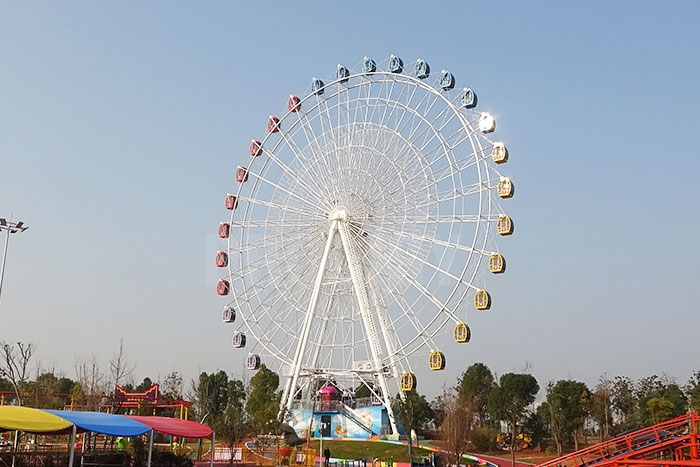
As the sun sets, theme parks transform into magical kingdoms of light and color. The difference between a good nighttime park and an unforgettable one often comes down to innovative LED lighting solutions. Modern light‑emitting diode (LED) technology has revolutionized how attractions are perceived after dark — from roller coasters and Ferris wheels to water shows and haunted houses.

This guide explores the most advanced LED lighting applications for theme parks, covering energy efficiency, dynamic control systems, guest immersion, and safety. Whether you’re a park owner, attraction designer, or lighting professional, these solutions will help you create breathtaking nighttime experiences that keep guests coming back.
Why LED Lighting Is a Game‑Changer for Theme Parks
Traditional lighting — halogen, metal halide, or fluorescent — struggles to meet the demanding needs of outdoor attractions. LEDs have changed the equation completely.
Key Benefits of LED Technology in Amusement Parks
- Energy savings – LEDs consume up to 80% less energy than conventional lamps, drastically reducing operational costs.
- Long lifespan – Rated 50,000–100,000 hours, meaning fewer replacements in hard‑to‑reach ride structures.
- Vibrant colors – RGB (red‑green‑blue) and RGBW (white) LEDs produce millions of colors without gels or filters.
- Dynamic control – DMX, DALI, or wireless protocols allow per‑pixel animation, chasing effects, and synchronization with music.
- Durability – IP65‑rated or higher LED fixtures resist rain, dust, vibration, and temperature extremes.
For nighttime attractions, these advantages translate into living, breathing light shows that can be reprogrammed seasonally — Halloween orange, winter blue, or spring pastels — with no hardware changes.
Top Innovative LED Lighting Solutions for Nighttime Attractions
Below are specific, proven LED systems and design strategies that top parks (Disney, Universal, Europa‑Park) are using right now.
1. Interactive Ride‑Along LED Lighting
Instead of static illumination, rides become part of the storytelling. Addressable LED strips embedded along coaster rails, dark ride walls, or spinning teacups react to ride vehicles in real time.
- How it works: Sensors detect train position; LED pixels light up ahead of the train (like a “light wave” chasing the ride) or change color based on speed/G‑force.
- Example: The VelociCoaster at Universal’s Islands of Adventure uses LED railing effects that pulse faster as the launch sequence begins.
- SEO keyword cluster: interactive ride lighting, LED chase effects, position‑synchronized illumination
2. Projection Mapping Synced with LED Accents
Projection mapping has been popular for years, but combining it with low‑resolution LED matrix panels or accent pixel bars creates depth and immersion.
- Application: On a castle facade, LED strips outline windows and turrets while projectors fill the walls with animation. The LEDs act as “practical” light sources that match the projection content.
- Pro tip: Use a media server (e.g., Dataton Watchout, Resolume) to drive both projectors and LED fixtures from the same timeline.
- Result: Characters appear to “break through” real lit windows, blurring the line between physical and digital.
3. Ferris Wheel & Observation Wheel Pixel Mapping
Giant wheels are iconic nighttime landmarks. Instead of uniform color washes, pixel‑mapped LED nodes on each spoke or cabin turn the wheel into a massive circular display.
- Technology: Each LED node is individually addressable. A controller maps real‑world positions to a virtual grid, allowing animations like spirals, text (“LOVE”), or even low‑resolution video clips.
- Power & data: Slip rings or wireless DMX send signals to rotating parts.
- Case study: The High Roller in Las Vegas and London Eye have both used pixel‑mapped LED systems for New Year’s Eve countdowns.
4. Immersive Pathway & Queue Line Lighting
Waiting in line is often the worst part of a park visit. LED lighting turns queues into pre‑shows.
- Solutions:
- Step‑activated LED tiles that light up under guests’ feet.
- Tunable white LEDs that gradually shift from warm (relaxed) to cool (alerting) as guests approach the boarding area.
- Color‑changing bollards and tree uplights that synchronize with the ride’s theme music.
- Benefit: Reduces perceived wait time by 30% (studies show interactive lighting lowers boredom).
- Example: Disney’s Rise of the Resistance queue uses LED strips inside “cave” walls to simulate blaster fire.
5. Water Show & Fountain LED Integration
Nighttime spectaculars with water, fountains, and lasers rely heavily on LEDs. The latest innovation is submersible RGBW LED fixtures with narrow beam angles (10°–25°) for precise fountain nozzle illumination.
- Features:
- DMX‑controlled color mixing per fountain head.
- High CRI (Color Rendering Index >90) for natural skin tones on live actors on floating stages.
- Synchronized with music via MIDI timecode.
- Top product example: Chauvet Professional COLORado series or Claypaky Scenius (weatherized).
6. Safety & Wayfinding with Aesthetic LEDs
Not all LED solutions are for show. Integrated safety lighting can be beautiful and functional.
- Stair nosing LED strips – Illuminate edges of steps in low‑light areas without being harsh.
- Path guidance via color coding – Green path = open / exit, red path = closed / backstage. Change colors dynamically based on crowd flow.
- Emergency egress lights – Battery‑backed LED strips that double as decorative cove lighting during normal operation.
Parks that blend safety into theming receive higher guest satisfaction scores.
Comparison Table: Traditional vs. Innovative LED Lighting for Night Rides
| Feature | Traditional Lighting (Halogen/MH) | Innovative LED Lighting |
|---|---|---|
| Energy cost per 1,000 hours | 150–250 | 30–50 |
| Color change capability | Requires physical gels (labor‑intensive) | Instant digital color mixing (no gels) |
| Animation complexity | None / basic blink | Pixel‑mapped, video‑rate animations, live DMX control |
| Lifespan | 2,000–10,000 hours | 50,000–100,000 hours |
| Vibration resistance | Low (filaments break) | High (solid‑state) |
| Remote monitoring | No | IoT‑enabled dashboards (fault alerts, lumens reporting) |
How to Design an LED Lighting System for a Nighttime Attraction
Successful implementation requires a structured approach. Follow these 6 steps:
Step 1: Define the Guest Journey & Emotional Peaks
Map the ride or attraction sequence: queue → load → lift hill → main drop → brake run → unload. Assign a color/mood to each segment (e.g., blue = suspense, red = danger, white = climax).
Step 2: Choose the Right LED Fixture Types
- Pixel strips (30–60 LEDs/m) – For railings, contours, coaster spines.
- High‑power floodlights (e.g., 100W RGBW) – For facade washes or large structures.
- Ground‑recessed linear LEDs – Path edges, step lighting.
- Wireless battery‑powered LEDs – For seasonal or portable attractions (easy to relocate).
Step 3: Select Control Protocol
- DMX512 – Industry standard for live events but requires cabling.
- Art‑Net / sACN – Ethernet‑based, good for large pixel maps.
- Wireless DMX (RC4, LumenRadio) – For rotating rides or hard‑to‑cable areas.
Step 4: Power & Data Distribution
Calculate voltage drop (use 24V DC instead of 12V for runs >15m). Install waterproof junction boxes. Consider Power over Ethernet (PoE) for low‑density installations.
Step 5: Simulate & Program Content
Use pre‑visualization software (e.g., Capture, MADRIX, Resolume) to design light shows before installing a single fixture. This cuts on‑site programming time by 60%.
Step 6: Test for Glare & Dark Adaptation
Nighttime riders’ eyes are dark‑adapted. Avoid direct line‑of‑sight to high‑brightness LEDs. Use diffusers or indirect uplighting to maintain comfort.
Real‑World Case Studies
Case A: Europa‑Park (Germany) – Voletarium Flying Theater
Europa‑Park installed addressable LED ceiling panels that mimic a starry sky during the pre‑show, then shift to animated clouds that “part” just before guests board. The LEDs are controlled via an Art‑Net system tied to the ride’s dispatch cycle. Result: 15% higher guest satisfaction scores for nighttime operation.
Case B: Six Flags Magic Mountain (USA) – Wonder Woman Flight of Courage
This single‑rail coaster features LED‑embedded rail lighting that tracks the train’s position. Ahead of the train, LEDs turn bright red; behind, they fade to purple. Riders feel like they are “outrunning” the light. The system uses wireless DMX transceivers on each train.
Case C: Chimelong Ocean Kingdom (China) – Night Parade
A fleet of 24 parade floats, each with over 20,000 individually controlled LED pixels, creates moving animations (swimming fish, blooming flowers). The entire parade is synchronized via GPS timecode, accurate to 1 millisecond.
Energy Efficiency & Sustainability Benefits
Theme parks operate under increasing environmental regulations. LED lighting directly supports green goals:
- Reduced carbon footprint – A medium‑sized park can save over 500 MWh/year switching from 400W metal halide to 80W LED floods.
- No hazardous materials – LEDs contain no mercury (unlike fluorescent).
- Solar compatibility – Low voltage (12V/24V) LED systems integrate easily with on‑site solar PV panels for path lighting.
Many parks now advertise “LED‑illuminated night attractions” in their sustainability reports, which also boosts brand reputation.
Future Trends in Theme Park LED Lighting
- Li‑Fi (Light Fidelity) – LED fixtures that transmit data to guests’ phones (e.g., queue wait times or trivia). Several European parks are piloting this in 2025–2026.
- Emotion‑adaptive lighting – Cameras track facial expressions of riders; LEDs change color to amplify fear, joy, or surprise in real time.
- Kinetic LED displays – Moving LED panels attached to robotic arms (already used in some dark rides by ETF Ride Systems).
- Organic LEDs (OLEDs) – Flexible, transparent light panels that could replace glass windows in ride cabins, turning every surface into a display.
Frequently Asked Questions (FAQ)
Q1: Are LED lighting systems more expensive upfront than traditional lighting?
A: Yes, initial fixture costs are typically 2–3× higher. However, ROI is achieved within 1–2 years due to 80% lower energy bills and reduced maintenance (no bulb changes). Most major parks now specify LED‑only for new attractions.
Q2: Can existing rides be retrofitted with LED lighting?
A: Absolutely. Retrofitting is common. Challenges include running low‑voltage cables and DMX lines, but wireless DMX and battery‑powered LED solutions eliminate much of the work. Always consult an electrical engineer for load calculations.
Q3: How do LEDs perform in extreme weather (rain, snow, heat)?
A: Choose fixtures with IP65 (water jets) or IP67 (temporary immersion). Operating temperature range should be –20°C to +50°C (–4°F to 122°F). Reputable brands (Philips Color Kinetics, Lumenpulse) offer weatherized versions specifically for theme parks.
Q4: Do bright LEDs disturb wildlife in outdoor parks?
A: Potential issue for parks near natural reserves. Use amber‑tuned LEDs (1800K–2200K) with lower blue content, plus motion sensors to dim lights when no guests are present. Many zoos and nature‑adjacent parks follow “dark sky” lighting guidelines.
Q5: Can LED lighting be integrated with ride control systems (PLC)?
A: Yes. Standard practice: the ride PLC sends triggers (e.g., “train passed sensor 7”) via Ethernet/IP or dry contacts to a lighting controller (e.g., Enttec, GrandMA). The lighting controller then executes pre‑programmed effects. This is critical for coaster chase lighting.
Conclusion
Innovative LED lighting solutions have moved far beyond simple color washes. Today, they are integral to storytelling, guest safety, energy management, and even ride operations. From pixel‑mapped Ferris wheels to interactive queue lines, LEDs offer theme parks a powerful tool to captivate nighttime audiences.
As guest expectations rise — and as nightly attendance grows — investing in dynamic, addressable, and sustainable LED systems is no longer optional. It is a competitive necessity.
Ready to illuminate your park’s nighttime attractions? Start with a lighting audit, then prioritize one iconic ride for a pixel‑mapped LED upgrade. The results — in guest smiles, social media shares, and energy savings — will speak for themselves.


