

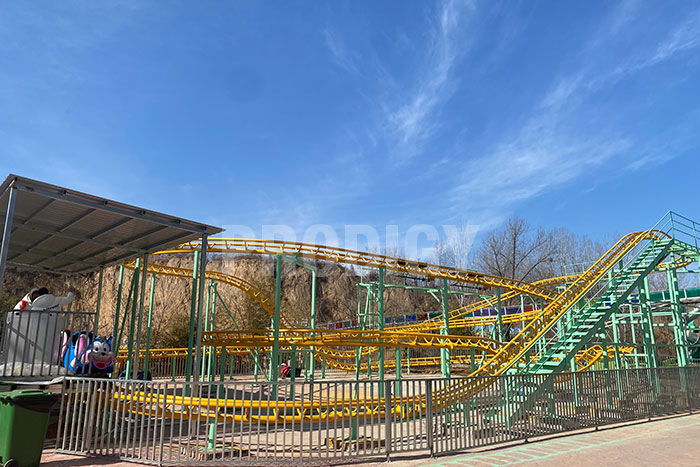
For amusement park owners, family entertainment center (FEC) operators, tourism developers, and resort investors, the question of how much it costs to build a roller coaster is often the first—and most important—consideration. When the manufacturer in question is Zhengzhou Prodigy Amusement Equipment Co., Ltd., the answer requires understanding not only base equipment pricing but also the full spectrum of factors that influence final costs.
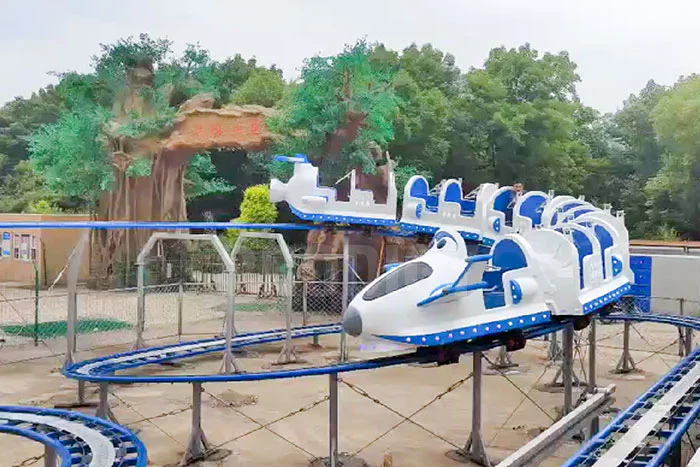
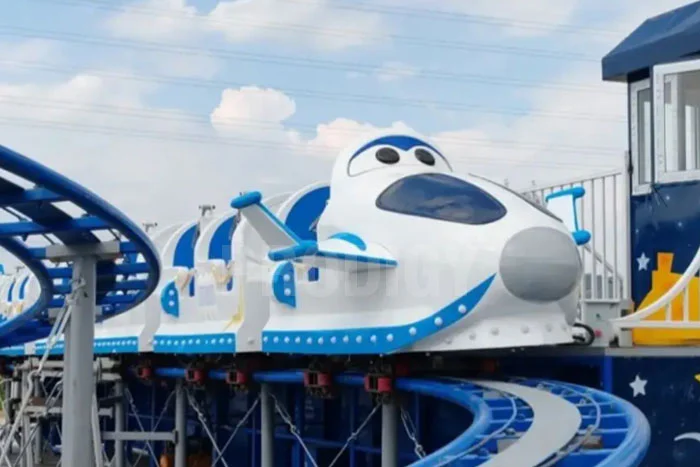
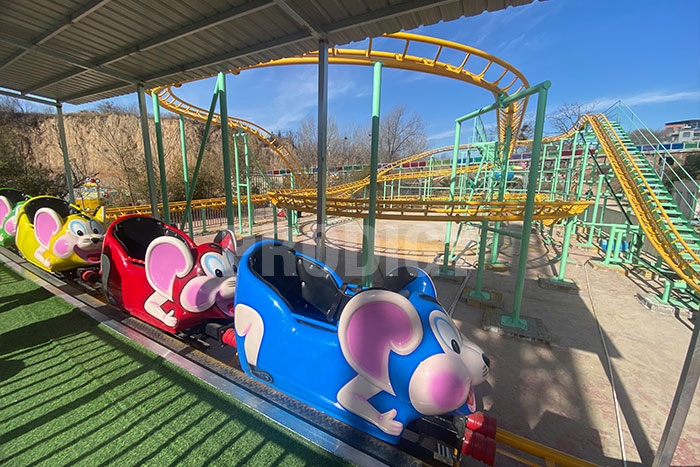
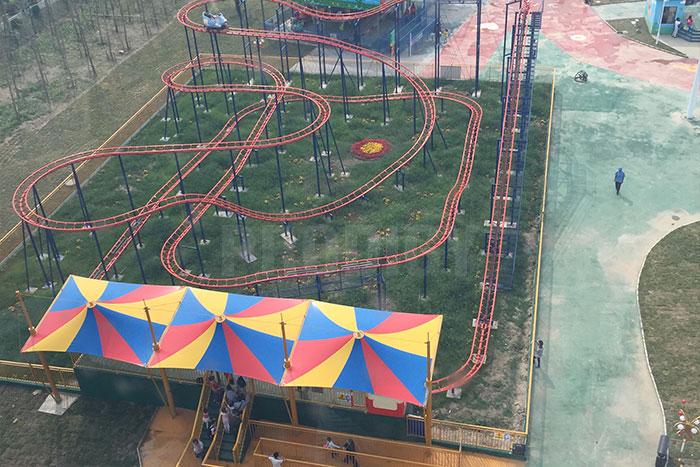
This comprehensive guide examines the cost to build a Prodigy roller coaster across all model categories, breaks down price drivers, compares Prodigy‘s offerings to market benchmarks, and provides a complete framework for budgeting your project from initial inquiry to grand opening.
Who Is Prodigy? A Trusted Chinese Roller Coaster Manufacturer
Before analyzing costs, it’s essential to understand the manufacturer behind the equipment. Zhengzhou Prodigy Amusement Equipment Co., Ltd. is a professional enterprise headquartered in Zhengzhou, Henan Province—the heart of China’s amusement equipment manufacturing industry. Over 70% of China‘s exported amusement rides originate from this region, benefiting fromintegrated ecosystems covering steel fabrication, electrical systems integration, and precision engineering.
Prodigy, founded in 2008, operates a 55,000-square-meter manufacturing base and maintains a 3,000-square-meter showroom. The company holds 70 patents and has been recognized as both a High-Tech Enterprise and a “Specialized and Sophisticated” enterprise. Prodigy specializes in theme park planning, design, and brand franchising under the “Prodigy Kingdom” brand, with key divisions encompassing marketing, manufacturing, R&D, operations, and after-sales service. The company is also prominently listed on IAAPA.org, signaling its credibility within the international amusement industry.
For buyers, Prodigy sits in the middle-market sweet spot: offering more customization and higher quality than discount entry-level suppliers, while remaining significantly more accessible than premium-tier manufacturers. According to B2B platform performance data, Prodigy achieves strong customer satisfaction metrics, particularly for its fiberglass mid-size thrill rides.
Prodigy Roller Coaster Price Ranges: Complete Overview
The cost to build a Prodigy roller coaster varies dramatically based on model type, size, track length, complexity, and customization. Below is a comprehensive price range table based on available market data for Prodigy products and comparable Chinese manufacturers.
| Model Type | Track Length | Passenger Capacity | Price Range (USD) | Best Suited For |
|---|---|---|---|---|
| Non-Powered / Pedal Coaster | 11m × 5m footprint | 2 passengers | ~5,000–15,000 | Small playgrounds, low-budget projects |
| Mini Kids Roller Coaster | 80–100m | 10–20 children | 15,000–25,000 | Children‘s parks, indoor FECs, shopping malls |
| Small Family Coaster (e.g., “Prodigy Star Interstellar Coaster”) | 116m | 22 passengers | ~$20,000 | Regional family parks, resorts, tourist destinations |
| Mid-Size Thrill Coaster / Fiberglass Ride | 150–250m | 20–30 passengers | 20,000–150,000 | Mid-sized amusement parks, standalone attractions |
| Extended Family Coaster | 280m+ | 30–50+ passengers | 100,000–280,000 | Commercial parks seeking signature attractions |
| Custom Large-Scale Coaster | 300–500m+ | 40–60+ passengers | 200,000–500,000+ | Major theme parks, destination attractions |
*Note: Prices represent FOB/factory pricing. Installation, shipping, foundation work, customs duties, and site preparation add substantial additional costs—often 30% to 100% or more of the equipment cost.*
Specific Prodigy Product Pricing Examples
Prodigy‘s “Parent-Child Unpowered Cable Roller Coaster” (non-powered gravity model) is listed at ¥34,989.50 (approximately 4,800USD)forasingleset,droppingto¥13,995.80(approximately1,900 USD) per set for orders of two or more units. Key specifications include steel construction, 2-passenger capacity, 11m × 5m footprint (customizable), ISO 9001 and CE certification, 1-year warranty, and the ability to operate without external power—making it an accessible entry point for smaller venues.
Prodigy‘s “Prodigy Star Interstellar Coaster” —a small family roller coaster—is listed at ¥139,958 (approximately $19,200 USD) for a single set. Specifications include steel and fiberglass construction, 22 passenger capacity, 380V voltage at 15kW power, 116m track length, top speed of 19 km/h (approximately 12 mph), coverage area of 26m × 17.2m, 12-month warranty, and full customization available from a minimum order quantity of one set.
For buyers purchasing multiple units or bundling with other equipment, Prodigy offers significant volume discounts. The company’s Ring Car product demonstrates this clearly: single units priced at approximately 30,000,droppingtoapproximately20,000 per unit for orders of two or more—a 33% discount. Similar volume pricing applies to roller coaster purchases.
Prodigy vs. Industry-Wide Pricing Benchmarks
To contextualize Prodigy‘s pricing, it’s helpful to understand cost ranges across the broader Chinese roller coaster manufacturing market:
- Mini Roller Coasters (kiddie models): Industry-wide prices typically range from 10,000to50,000.
- Small Family Roller Coasters: Market prices generally range from 60,000to150,000 or more for mainstream family models.
- Mid-Size Thrill Coasters: Equipment costs typically fall between 150,000and350,000 before installation.
- Large Thrill Coasters: Equipment prices range from 350,000to500,000+ depending on complexity.
Prodigy’s pricing for its Star Interstellar Coaster at approximately $19,200 sits at the lower end of the market for powered family roller coasters. This positions Prodigy as particularly accessible for regional parks, FECs, and first-time buyers, though buyers should note that customization, lighting, theming, and higher-specced elements will increase costs closer to mid-market benchmarks.
What Factors Drive the Cost of Building a Prodigy Roller Coaster?
Understanding the variables that influence price is essential for accurate budgeting and avoiding surprises.
1. Track Length and Layout Complexity
Track length is the single greatest cost driver. Shorter layouts (30–100 meters) require less steel, fewer supports, and simpler engineering. As track extends to 150–250 meters or longer, material and fabrication costs increase proportionally. Complex layouts with multiple hills, banked turns, and continuous circuits add design complexity. Reference pricing for 180-meter track layouts typically ranges from approximately 80,000to120,000, while 280+meter layouts can reach approximately $200,000 or more.
2. Train Configuration and Passenger Capacity
The number, type, and capacity of trains directly affect cost. Smaller trains carrying 10–20 passengers cost far less than larger 40–60 passenger configurations. Enclosed fiberglass trains with themed exteriors cost more than open designs. Additional train units require extended brake runs and station tracks, increasing system costs.
3. Drive System and Propulsion Method
Traditional chain lift hills are the most economical drive system. Advanced launch systems (LSM—Linear Synchronous Motor or friction-wheel launches) add significant cost but provide smoother acceleration and reduced maintenance compared to chain lifts. Electric drive systems typically involve higher upfront investment but offer lower long-term energy costs and quieter operation.
4. Material Choices: Steel vs. Hybrid
Prodigy primarily manufacturers steel roller coasters. Basic steel coasters cost more than wooden alternatives upfront but offer smoother rides, greater durability, and longer intervals between major maintenance. Wooden coasters are typically 20–30% cheaper to build than steel equivalents but require more frequent inspections and refurbishment. Hybrid designs—wooden structures with steel track elements—represent a middle ground gaining popularity.
5. Customization and Theming
Prodigy supports extensive customization at remarkably low minimum order quantities (as low as 1 set). Customization options include fiberglass bodywork, custom color schemes, LED lighting integration, embedded sound systems, and full branding integration—including onboard graphics. Each custom element adds to base pricing but can be essential for creating a signature attraction.
6. Safety Certifications and Compliance
Prodigy roller coasters are manufactured with CE certification and ISO 9001 quality management certification. Compliance with international safety standards—including EN 13814 (European permanent amusement structure standard) and ASTM F2291 (U.S. standard)—requires rigorous engineering and documentation. While certification adds to manufacturing costs, it reduces regulatory risk and ensures legal operation in target markets.
7. Lighting and Digital Features
Basic LED lighting is cost-effective while delivering strong nighttime visibility. Advanced interactive lighting systems—programmable, synchronizable with music, capable of creating dynamic shows—add significant costs. For 2026, Prodigy offers optional digital features including app synchronization for ride statistics, AR overlays, and gamified rider experiences on select large-scale models—all of which increase pricing but enhance guest engagement.
Hidden Costs: Beyond the Equipment Purchase Price
The quoted factory price is rarely the final invoice. Building a complete roller coaster attraction requires accounting for several additional cost categories.
Shipping and International Logistics
Roller coasters are oversized, heavy cargo comprising steel track sections, support columns, fiberglass trains, control cabinets, and electrical harnesses. Primary export ports for Zhengzhou manufacturers include Shanghai and Ningbo. Buyers should request CIF or CFR quotations that include shipping to destination ports. For full-scale installations, delivery and handling costs can range from 100,000to4 million depending on distance and shipment size.
Foundation and Civil Works
Prodigy provides foundation design specifications, but local contractors perform the actual work. Foundation costs vary dramatically by site conditions: stable ground requiring standard concrete footings costs the least, while poor soil requiring deep pilings or engineered raft foundations can double or triple site preparation budgets. Industry benchmarks show site preparation and foundation costs ranging from 200,000to8 million for full-scale installations.
Installation and Commissioning
Prodigy can dispatch engineers for on-site installation supervision. Buyers should clarify whether installation supervision is included in the purchase price or billed separately; the number of engineers and duration of on-site presence; who covers travel, accommodation, and per diems for on-site personnel; and how crane rental, rigging, and local labor costs are allocated. Industry-wide, installation costs typically range from 100,000to4 million depending on project scale and complexity.
Electrical and Control Systems
Beyond the ride’s base electrical system, buyers must account for power supply upgrades, SCADA (Supervisory Control and Data Acquisition) integration, safety interlock systems, and ride sequencing controls. Electrical and control system costs typically range from 150,000to2.5 million for full-scale coaster installations.
Permits, Inspections, and Regulatory Compliance
Permit fees, environmental reviews, safety inspections, and regulatory approval costs can range from 20,000to1 million depending on jurisdiction. Urban megacenters typically incur higher site costs and permitting fees, while rural or suburban sites may see lower rates.
Customs Duties, Taxes, and Import Fees
Duty rates vary by country. Importers should research applicable tariff codes for amusement rides, factor in value-added tax (VAT) or goods and services tax (GST), and budget for customs broker fees and port handling charges. Working with an experienced customs broker familiar with amusement ride categories is strongly recommended.
Annual Maintenance and Operation
A well-maintained steel coaster can operate for 25–30 years, but ongoing costs must be factored into the budget. Annual maintenance typically includes track inspections, train servicing, restraint system checks, control system diagnostics, and repainting. Industry-wide, annual maintenance costs average between 100,000and600,000 for large-scale roller coasters, with high-end installations reaching $2 million annually.
Contingency Budget
Industry best practices recommend setting aside 10% to 15% of total project costs for unforeseen expenses—including rough terrain requiring additional foundation work, shipping delays, design changes, and labor rate fluctuations. Contingency budgets typically range from 100,000to2 million or more for complex installations.
Comparison: Prodigy vs. Market-Wide Total Project Costs
For full context, here is how roller coaster project costs compare across the broader market:
| Cost Component | Prodigy Equipment (FOB) | Industry-Wide Range (U.S. Market) |
|---|---|---|
| Basic Coaster System | 15,000–500,000+ | 1million–15 million |
| Engineering & Design | Often included or minimal | 200,000–3 million |
| Site Preparation & Foundations | Buyer’s local cost | 200,000–8 million |
| Delivery & Handling | Freight varies | 100,000–4 million |
| Electrical & Controls | Buyer’s local cost | 150,000–2.5 million |
| Permits & Compliance | Buyer‘s local cost | 20,000–1 million |
| Annual Maintenance | 5–10% of equipment cost | 100,000–600,000+ |
*Sources for industry-wide ranges: WellBuiltFlorida 2026 guide; OneAndDonePrep 2026 guide*
It is critical to note that the industry-wide “entire coaster project” figures in the table above—ranging from 2millionto25 million—typically include design, procurement, assembly, testing, commissioning, site preparation, utilities, electrical systems, and permitting, and are based on installations in the United States where labor, regulatory, and material costs are substantially higher than in export-oriented Asian markets. Buyers importing directly from Chinese manufacturers pay significantly lower equipment costs but must budget for shipping, customs, and local installation separately.
What Can You Build for Different Budgets?
Under $25,000
Prodigy offers compact kid‘s coasters and non-powered gravity models. These small footprint installations are ideal for children’s parks, indoor FECs, shopping malls, and residential community play areas. Purchase includes basic equipment only; installation and site prep are additional.
25,000–100,000
For buyers in this range, Prodigy‘s Star Interstellar-family coaster and other compact powered family models become accessible. These installations can serve as signature attractions for regional parks, small tourist destinations, and family entertainment centers. Customization options—theming, colors, basic lighting—are available at higher price points.
100,000–300,000
Long-track thrill coasters (280m+) and Prodigy’s more advanced family coasters fall into this range. These installations can command higher ticket prices, achieve stronger daily throughput (800+ riders per hour), and become the anchor attraction of mid-sized parks.
$300,000+
For major theme parks and destination attractions requiring large-scale family or extreme coasters with full digital integration—app sync, AR overlays, advanced lighting, premium theming—budgets above $300,000 for equipment alone are required. At this price point, Prodigy competes favorably against both premium Chinese manufacturers (like Jinma Rides) and Western manufacturers (like Zamperla, Maurer) on value while offering comparable customisation.
Investment Return: Can a Prodigy Roller Coaster Pay for Itself?
For commercial buyers, return on investment is the ultimate measure of value. Here is a realistic framework for evaluating potential payback.
A small Prodigy coaster in the 15,000–25,000 equipment range (with total installed costs potentially 30,000–50,000) can achieve payback in as little as 6 to 12 months in high-traffic venues charging modest per-rider fees. Even at 3to5 per rider, high daily ridership makes these small coasters highly profitable.
A mid-size thrill coaster in the 150,000–280,000 equipment range—with total installed costs potentially 250,000to500,000—has higher capital requirements but also generates premium ticket pricing potential. At 8to15 per rider and with daily throughput of 500+ riders per day, such an installation can achieve payback within 12 to 24 months.
A large-scale family coaster in the 300,000–500,000 equipment range (total installed costs potentially 500,000to1 million+) serves as a signature attraction drawing increased park visitation across all revenue streams—not just ride tickets. Payback periods of 2 to 4 years are reasonable, with long-term profitability continuing for decades.
Industry analysis indicates that major thrill rides (500,000to3 million+) typically show returns in 3 to 5 years, while spectacular roller coasters (2millionto20 million+) may see payback in 5 to 7 years.
How to Get the Best Price on a Prodigy Roller Coaster
Request Verified Quotes from Multiple Sources
Submit requests for quotes directly through Prodigy‘s official platforms. Request itemized quotations that include FOB pricing at the nearest Chinese port (Shanghai or Ningbo), customization costs (theming, colors, lighting), spare parts packages (motors, bearings, tires, control components), warranty terms (minimum 12 months on mechanical components), and estimated shipping weight, dimensions, and container count.
Alibaba’s Trade Assurance offers built-in buyer protection including SSL encryption for payments and refund policies for undelivered, defective, or damaged goods—an important layer of risk mitigation for international buyers.
Compare Multiple Suppliers
Zhengzhou and the surrounding Henan cluster host numerous roller coaster manufacturers. Compare Prodigy‘s pricing and specifications against other Zhengzhou-based suppliers. Documentation and comparison across at least three suppliers ensures competitive pricing.
Time Your Purchase Strategically
Chinese manufacturers often offer favourable pricing during off-peak manufacturing seasons (January–February before Chinese New Year and August–September) and following major industry events such as IAAPA (International Association of Amusement Parks and Attractions expos). Some buyers report better pricing flexibility during these windows.
Bundle Multiple Rides
Prodigy manufactures nine categories of amusement equipment. Inquiries that combine roller coaster orders with additional rides—ferris wheels, carousels, pendulum rides, bumper cars, VR experiences—often yield better per-unit pricing and more favourable shipping terms through consolidated procurement.
Safety Certifications: Non-Negotiable Requirements
Before committing to any purchase, verify that Prodigy roller coasters meet or exceed required international safety standards:
- ISO 9001 – Quality Management Systems certification
- CE Marking – European Conformity for mechanical safety
- EN 13814 – European standard for permanent amusement ride structural integrity
- ASTM F2291 – U.S. standard for ride design and operation (for North American imports)
Prodigy prominently displays these certifications on its product pages, as evidenced by its Star Interstellar Coaster listing indicating ISO 9001 and CE compliance. However, buyers should always request current, valid documentation directly and consider third-party verification through inspection services such as TÜV or SGS.
Step-by-Step Guide to Purchasing a Prodigy Roller Coaster
- Define your target audience and venue requirements – Determine whether your coaster will primarily serve families with young children (kiddie/family model), mixed-age family groups, or thrill-seeking teenagers/young adults.
- Request verified quotes – Submit detailed RFQs specifying desired track length, passenger capacity, customization preferences (theming, colors, lighting), and delivery destination.
- Conduct supplier due diligence – Request current certification documentation (ISO 9001, CE, EN 13814, ASTM F2291 as applicable), contact previous international buyers, particularly those in your target market region, inspect production runs via video call or factory visit, and utilize third-party inspection services from SGS or TÜV for factory audits.
- Negotiate shipping terms – Request CIF (Cost, Insurance, Freight) or CFR (Cost and Freight) quotes that include shipping to destination ports for accurate cost comparison.
- Secure payment terms – Use Alibaba‘s Trade Assurance or an escrow arrangement that releases payment only upon confirmed shipment or site commissioning, protecting against defective or non-delivered goods.
- Plan logistics and installation early – Engage a freight forwarder experienced with oversized amusement equipment well before production completes to avoid costly demurrage or storage fees.
- Arrange on-site installation supervision – Clarify whether Prodigy engineers will be present for installation, the number of personnel, duration, and who covers travel and accommodation expenses.
Prodigy‘s Place in the Global Roller Coaster Market
The global roller coaster market was valued at 4.42billionin2025andisprojectedtoreach5.94 billion by 2031, representing a compound annual growth rate of just over 5%. The broader amusement rides market is growing even faster, with a CAGR of 7.73% through 2026.
Several key trends are shaping the market and influencing pricing decisions: integrated digital experiences (app sync, AR overlays, gamification) have moved from novelty to expectation; immersive theming is increasingly integrated into expansive, story-driven ecosystems; sustainability focus is driving demand for lower-carbon manufacturing processes and recyclable materials; and mid-tier park expansion across Southeast Asia, Latin America, and the Middle East creates significant demand for competitively priced, quality-manufactured Chinese coasters.
Prodigy is well-positioned to meet this demand through its flexible customization (minimum order quantities as low as 1 set), 55,000-square-meter production capacity, competitive mid-range pricing, and documented after-sales support structure.
Conclusion: Is Building a Prodigy Roller Coaster Worth the Investment?
The answer depends on your venue type, target audience, and budget. For buyers seeking a reliable, quality-manufactured roller coaster at accessible price points, Prodigy represents exceptional value. Their confirmed pricing for specific models—from the non-powered gravity model at approximately 5,000–15,000, to the Star Interstellar family coaster at approximately 20,000,tomid−sizefiberglassthrillridesrangingfrom20,000 to $150,000—demonstrates clear positioning at the value-oriented end of the market.
The total cost to build a Prodigy roller coaster ranges from under 20,000forthesmallestmodels(equipmentonly)toover500,000 for custom large-scale installations (equipment only). When shipping, site preparation, installation, electrical integration, permitting, and contingency are added, total project costs typically reach 1.5 to 2 times equipment costs—and potentially higher for complex or remote installations.
Before committing to any purchase, verify current certification documentation, define the full scope of delivery including installation and commissioning, conduct supplier due diligence through client references or third-party inspection, secure payment terms offering milestone-based release to mitigate risk, and budget realistically for all hidden costs beyond the equipment price.
A well-chosen roller coaster from a reputable manufacturer like Prodigy will not simply move trains along steel tracks. It will become a destination draw that drives ticket sales, increases park visitation, generates valuable social media content, and produces lasting memories for riders—potentially for 30 years or more. With the global amusement market entering one of its most dynamic expansion phases, 2026 presents favorable conditions for buyers ready to move forward with roller coaster investments.


