


If you’re planning to start an amusement park, family entertainment center (FEC), shopping mall attraction, or community playground, the question you’re probably asking right now is: How much do rides actually cost to buy?
The short answer is that ride prices range from as little as 5,000∗∗forstandardkiddieridestoover∗∗5,000∗∗forstandardkiddieridestoover∗∗20 million for custom-designed steel roller coasters. But the equipment itself is only part of the total investment—installation, site preparation, shipping, certifications, and ongoing maintenance can add substantially to your budget.
This comprehensive 2026 guide breaks down ride costs by category, size, and type. It covers key factors that influence pricing, explores whether buying used rides can save you money, and helps you build a realistic budget for your project.
At a Glance: 2026 Ride Price Ranges by Category
The table below provides a quick overview of what you can expect to pay for different types of amusement rides in 2026, along with typical ROI timelines:
| Ride Category | Price Range | Typical ROI Timeline | Target Audience |
|---|---|---|---|
| Kiddie Rides | 5,000–50,000 | 1 – 2 years | Children (Ages 2–8) |
| Family Flat Rides | 50,000–500,000 | 2 – 4 years | Families / All Ages |
| Small Roller Coasters | 60,000–450,000+ | 2 – 5 years | Families & Thrill Seekers |
| Major Thrill Rides | 500,000–3,000,000 | 3 – 5 years | Teens / Adults |
| Large Roller Coasters | 1,000,000–10,000,000+ | 5 – 7 years | Thrill Seekers |
| Spectacular / Custom Coasters | 2,000,000–20,000,000+ | 5 – 7+ years | Thrill Seekers |
| Immersive Dark Rides | 5,000,000–50,000,000+ | 5 – 10+ years | All Ages |
Smaller attractions generally offer faster returns due to lower power consumption, higher turnover rates, and simpler operations. High-capacity signature rides drive marketing buzz and foot traffic, but smaller, highly efficient rides often provide the quickest path to profitability.
Ride Costs by Type and Size
1. Kiddie Rides (Entry-Level Investment)
Kiddie rides are designed for children typically under the age of 8–10. They feature low speed, compact footprints, bright colors, and high safety standards. These rides are excellent for shopping malls, supermarkets, indoor play areas, and community parks.
- Mini Pirate Ship Ride: 3,000–15,000
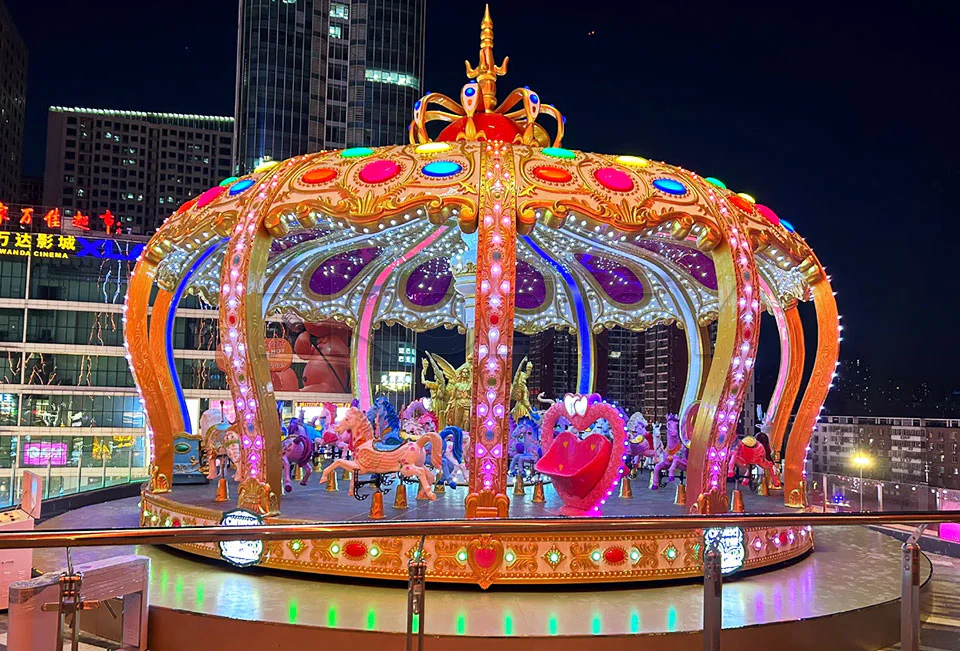
- Small Carousel Ride: 10,000–50,000
- Digital / Interactive Rides: 4,000–30,000
- Coin-Operated Kiddie Rides: Often under $10,000 for basic models
- Mini Swing / Flying Chair Rides: Approximately 6,000–7,000
A basic kiddie ride might cost less than 10,000,whileacustomizedthemedversioncanexceed15,000. Even with a budget of 7,000–8,000, you can acquire several kiddie rides, one visual-anchor family ride, or a small interactive attraction that generates cash flow quickly.
2. Family Flat Rides
Flat rides are the backbone of most parks. They appeal to a broad demographic and typically offer strong throughput without requiring massive footprints.
- Casino & Bumper Cars: 50,000–150,000
- Small Ferris Wheels (Portable / Carnival): 150,000–500,000
- Mid-Sized Ferris Wheels (Amusement Park): 1,000,000–5,000,000+
- Medium-Sized Rotating Rides: 80,000–300,000
- Carousels (Luxury Models): From approximately $5,000 for smaller units
For traveling carnivals and fairs, portable Ferris wheels are the most affordable option, with used models often available between 80,000and250,000.
3. Roller Coasters (Small to Large)
Roller coaster prices vary more widely than almost any other ride category. Based on 2026 market data, here is the detailed breakdown:
- Entry-Level / Non-Powered Roller Coasters: 1,000–15,000
These are pedal-powered or gravity-driven mini coasters with short track lengths, low speeds, and strong interactivity—ideal for playgrounds and low-budget projects. - Mainstream Family Roller Coasters: 60,000–150,000
This is the most popular range for investors. Typical configurations include electric drive systems, track lengths of 150–250 meters, and capacities for 12–20 riders. Models include family coasters, wacky worm coasters, and dragon-themed spinning coasters. - High-Spec / Custom Family Coasters: 200,000–450,000+
These deliver near-large-coaster experiences with track lengths around 280–300 meters, multiple turns, noticeable drops, and strong visual impact. A Wild Mouse coaster with a 283-meter track typically costs within this range. - Large Steel Roller Coasters: 1,000,000–10,000,000+
Per-foot pricing ranges from 900to900to6,000, depending on design complexity, propulsion type (chain lift, launch, or magnetic), and theming. A major new steel coaster installation in the United States typically lands between 5,000,000and20,000,000, with top-tier custom projects climbing even higher. - Wooden Roller Coasters: 2,500,000–18,000,000
Wooden coasters are generally less expensive than their steel counterparts of similar size, though material costs for high-quality southern yellow pine or treated lumber continue to rise.
4. High-Capacity Thrill Rides and Specialty Attractions
Large thrill rides serve as signature attractions that draw crowds from miles away.
- Drop Towers / Tower Rides: 3,000,000–7,000,000+
- Water Rides (Wave Pools, Water Slides): 500,000–3,000,000+
- Giant City Observation Wheels:
100 , 000 , 000 + M a s s i v e s p o k e − l e s s F e r r i s w h e e l s i n m a j o r c i t i e s c o s t f a r b e y o n d t y p i c a l a m u s e m e n t p a r k b u d g e t s . A n o t a b l e e x a m p l e i s a n u p c o m i n g 2 b i l l i o n y u a n ( a p p r o x i m a t e l y - Immersive Dark Rides: 5,000,000–50,000,000+, with costs escalating significantly based on animatronics, projection mapping, and ride vehicle complexity.
- Tagada / Disco Rides: 9,800–40,000+ depending on capacity (8–40 seats), diameter, and lighting systems.
5. Real-World 2026 Examples
Recent theme park investments illustrate what signature attractions cost:
- Kentucky Kingdom’s new Flying Fox, a Vekoma suspended family coaster, carries a price tag of approximately $14 million.
- Dollywood’s record-breaking NightFlight Expedition, an indoor attraction set to open in spring 2026, costs over $50 million.
- An iconic UK seaside town is investing £8.72 million (approximately $11 million) in a new major attraction that will “drastically change” the town’s skyline.
- SeaWorld San Antonio constructed a new roller coaster with an investment of nearly $9 million.
Used vs. New Rides: How Much Can You Save?
For investors with limited initial capital, buying used amusement rides is a viable strategy. A well-maintained used roller coaster can cost at least 80% less than a new one. For small roller coasters, used prices range from $50,000 to several million dollars depending on age, condition, and manufacturer reputation.
Real auction data provides concrete reference points from a New England park liquidation:
- 1986 Chance Carousel: $90,000 (highest bid)
- Drop tower: Approximately $20,000
- Tracked ride (Alpine Railworks): Approximately $20,000
- 1962 Scrambler: $14,000
- Classic Ferris wheel (1951 “Big Eli”): Just $2,500 (disassembled condition)
- 1964 Astronaut ride: $4,000
- Vintage Jolly Caterpillar ride: $4,000
When evaluating used rides, prioritize documented maintenance logs, recent safety certifications, low operating hours, and available spare parts. Rides from reputable manufacturers (Chance, Huss, Zamperla, Vekoma, etc.) hold their value better due to reliability and parts availability. However, be aware that transporting a used ride can be expensive, and older attractions requiring significant repairs may be cost-prohibitive.
Key Factors That Influence Ride Prices
Beyond the type of ride you select, several variables drive the final sticker price:
Track Length (for Roller Coasters)
Longer tracks require more certified steel, precision welding, and larger structural supports. For comparison:
- A 180-meter track typically costs 80,000–80,000–120,000
- A 280-meter+ track typically costs $200,000+
Passenger Capacity
Higher capacity means larger ride structures, stronger drive systems, more vehicles, and more sophisticated restraint mechanisms. Increasing capacity from 12 to 24 riders can add 30–50% to the base equipment cost.
Materials and Build Quality
Stainless steel equipment can be 30–50% more expensive than plastic alternatives, but it offers far greater longevity and durability. Fiberglass-reinforced plastic (FRP) and aluminum alloys also command premium pricing but justify the investment through longer service life and enhanced ride aesthetics.
Power System
Non-powered (gravity-driven or human-powered) rides are the most affordable. Electric-powered rides require motors, control panels, and ongoing electricity costs. Hydraulic launch systems and magnetic propulsion add the most to both upfront and maintenance costs.
Customization and Theming
Bespoke color schemes, custom logos, themed packaging, LED lighting upgrades, and unique ride vehicle designs all increase costs. For an $8,000–15,000 ride, customization can add 15–30%.
Certifications and Compliance
Rides sold into the United States must meet ASTM safety standards. European markets require CE certification. Some installations demand third-party inspections from agencies like TÜV. Certification costs can range from a few thousand to tens of thousands of dollars per ride.
Manufacturer Reputation
Well-known global brands (Zamperla, B&M, Intamin, Vekoma) command higher prices than regional or budget-oriented manufacturers. However, they typically offer better parts availability, more extensive service networks, and longer warranty periods.
Order Quantity
Bulk orders reduce per-unit pricing. Suppliers commonly offer tiered discounts – for instance, 70perunitforsinglepurchasesdroppingto65 per unit for quantities of five or more on smaller items.
Beyond the Purchase Price: Total Project Cost
The equipment itself is only the beginning. A comprehensive budget must account for expenses that can add 20–40% or more to your base purchase:
| Cost Component | Typical Range (as % of equipment cost) |
|---|---|
| Shipping & Freight (international) | 15–25% |
| Customs Duties & Import Taxes | 5–15% of CIF value |
| Site Preparation & Foundations | 15–25% |
| Professional Installation | 10–15% |
| Safety Certifications & Permits | 3–10% |
| Electrical / Utility Upgrades | Varies widely |
| First-Year Spare Parts Inventory | 5–10% |
A 6,000-square-foot family entertainment center typically ranges from 1.2millionto1.2millionto1.5 million for a mid-range FEC. A smaller indoor park with fewer attractions might cost 750,000to750,000to1 million, while a large-scale (20,000+ square foot) project can exceed **
For outdoor playgrounds and community parks, Chinese market data suggests total investments of approximately:
- Small community playground (100–300 sq m): 50,000 – 150,000 RMB (7,000–21,000)
- Medium-scale theme zone (300–800 sq m): 150,000 – 500,000 RMB (21,000–70,000)
- Large outdoor park (800+ sq m): 500,000 – 2,000,000+ RMB (70,000–280,000+)
Within any amusement project, core equipment procurement accounts for 60–70% of total investment, while site preparation and safety surfacing represent 15–25%, and installation, transport, and design account for 10–15%.
Return on Investment (ROI): How Quickly Will Rides Pay Back?
Different ride categories deliver different ROI timelines based on operating costs, ticket pricing, and throughput:
- Kiddie Rides (1–2 years): Low power consumption, fast loading/unloading, and high turnover deliver the fastest returns. A mini carousel with an 8,000initialinvestmentcharging3 per ride with 80–120 daily users can generate 240–360 daily revenue.
- Family Flat Rides (2–4 years): Carousels, swing rides, and Ferris wheels serve as park landmarks and draw repeat visitors.
- Major Thrill Rides (3–5 years): Giant Ferris wheels, tower swings, and drop towers demand larger footprints and more power but act as iconic visual anchors.
- Large Roller Coasters (5–7+ years): Custom steel coasters require the longest payback period, but they also generate the strongest marketing buzz and extended visitor dwell time.
- Non-Powered Gravity Rides (6–12 months): With minimal operating costs and no electricity bills, these affordable attractions offer the fastest payback of any category.
Investing in multiple smaller attractions often yields higher overall returns than spending the same capital on a single large attraction. A mix of affordable high-throughput rides balanced with one or two signature pieces optimizes both cash flow and guest experience.
Where to Buy Amusement Rides
- Direct from Manufacturers (China): Prodigy, Carnee Rides, Golden Horse (Jinma), Sinorides, and Hangtian Rides offer factory-direct pricing. FOB China pricing generally applies, with freight and import duties additional.
- Global Manufacturers: Zamperla (Italy), B&M (Switzerland/USA), Intamin (Switzerland/Liechtenstein), Vekoma (Netherlands), and SBF (Italy) produce premium equipment with correspondingly higher price points.
- Used Equipment Marketplaces: Amusement Trader, Ride Trader, and specialized auction houses list decommissioned rides from parks undergoing renovation or closure. International brokers also facilitate cross-border transactions.
- Industry Trade Shows: IAAPA Expo in Orlando (November 16–20, 2026) is the world’s largest amusement industry gathering, with over 43,000 registered participants in 2025. IAAPA events in Asia (Hong Kong, June 2026) and Europe (Spain) also provide direct access to suppliers.
- Online B2B Platforms: Alibaba and Global Sources list thousands of certified amusement ride manufacturers, with price transparency varying by supplier.
The global amusement park market exceeds $50 billion annually and is projected to grow significantly through 2029, making ride investment a robust long-term opportunity.
Frequently Asked Questions (FAQ)
What is the cheapest amusement ride I can buy?
Basic coin-operated kiddie rides can be purchased for under **1,000perunit∗∗,thoughcommercial−graderidessuitableforparkstypicallystartaround∗∗3,000–5,000∗∗[reference:58].Pedal−poweredorgravity−drivenminicoastersalsostartaround1,000.
What is the most expensive type of ride?
Immersive dark rides with advanced animatronics and projection systems range from 5millionto5millionto50 million+. Custom steel roller coasters with launches, inversions, and extensive theming often exceed $20 million.
How much does it cost to maintain a roller coaster annually?
Annual maintenance on a major roller coaster typically ranges from 500,000to500,000to1 million, including inspections, spare parts, repainting, insurance, and staff training. For small family coasters, annual operational costs are proportionally lower.
Can I buy a personal roller coaster for my backyard?
Yes, though securing permits is challenging. Small non-powered mini coasters are sometimes sold to individuals. However, zoning regulations, liability insurance, and safety inspections present significant obstacles for private installations.
Do I need insurance for amusement park rides?
Absolutely. General liability insurance covering guest injury is mandatory in virtually all jurisdictions. Premium costs vary based on ride type, capacity, location, and claims history.
Is it better to buy new or used rides?
New rides offer warranties, latest safety features, no hidden wear, and predictable installation timelines. Used rides offer significant upfront savings and can make sense for experienced operators who can assess mechanical condition and negotiate favorable terms. First-time investors are generally advised to start with new or manufacturer-refurbished equipment.
Conclusion: How Much Should You Budget?
Amusement ride costs span from under 10,000∗∗forkiddieridesto∗∗over10,000∗∗forkiddieridesto∗∗over20 million for world-class signature attractions. For a balanced family entertainment center or small park, a realistic initial equipment budget often falls between 200,000and200,000and1.5 million, with total project costs (including site preparation, installation, and permits) ranging higher.
For first-time investors starting modestly, a budget of 50,000–50,000–150,000 can acquire several high-ROI kiddie rides and one anchor family attraction—enough to launch a profitable small-scale operation. As you gain operational experience and build cash flow, you can expand into larger roller coasters and thrill rides that drive regional visitation.
Your best first step is to attend IAAPA Expo or a regional trade show to compare manufacturers side by side, request detailed quotes including delivered pricing, and speak directly with operators who have purchased similar equipment. Whatever your budget, the amusement ride market in 2026 offers viable entry points for virtually every investor—from the neighborhood playground to the regional theme park.


