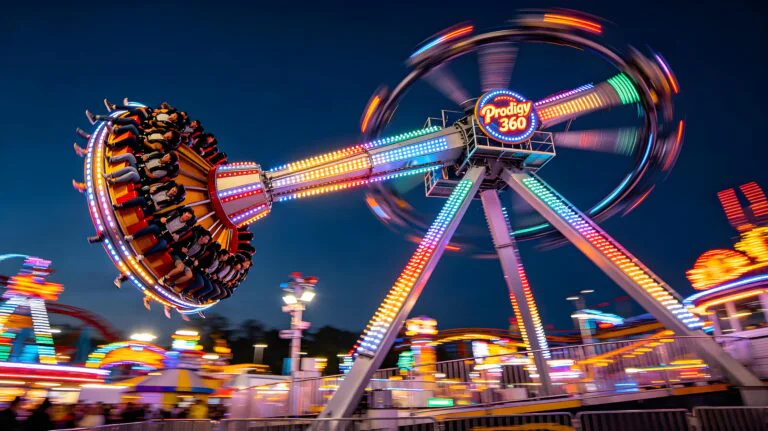
With their colorful lights, enchanting music, and timeless design, carousel rides remain one of the most beloved attractions in theme parks, shopping malls, resorts, and family entertainment centers worldwide. In an era of high-tech thrills and immersive digital experiences, the traditional carousel continues to hold a unique and cherished place in the hearts of visitors across all generations.
However, for park owners and investors, choosing the right carousel ride is not as simple as it seems. The decision requires careful consideration of multiple factors—size, design, quality, safety standards, price, and supplier credibility. A well-chosen carousel can boost foot traffic, enhance your park’s atmosphere, deliver consistent revenue, and strengthen your reputation. A poor choice can result in safety concerns, high maintenance costs, and a mismatch with your target audience.
This comprehensive guide will walk you through everything you need to know to select the ideal carousel ride for your business in 2026 and beyond.
Understanding the Terminology: Carousel vs. Merry-Go-Round
Before diving into selection criteria, it is important to clarify a common point of confusion. In everyday conversation, “carousel” and “merry-go-round” are often used interchangeably—a view supported even by Merriam-Webster. However, from a commercial procurement perspective, the distinction matters significantly.
A carousel is a commercial-grade, electrically driven amusement ride, designed as a visual anchor, built for continuous operation, and regulated by international safety standards. Carousels are elaborately decorated, with intricate carvings, rich colors, dazzling lights, and accompanying music. The animals move up and down, simulating a galloping effect that provides an interactive and engaging experience.
A merry-go-round, depending on region and context, may refer to either a simplified amusement ride with minimal theming or a manually operated playground spinner with no commercial certification value. Merry-go-rounds typically feature simpler designs, fixed seats, little to no music or only basic sound effects, and purely horizontal rotation without vertical movement.
Why does this matter? Consider this real-world scenario: An investor requests a “merry-go-round” to save budget. What arrives—if specifications are unclear—may be a non-certified rotating platform unsuitable for commercial operation, insurance approval, or municipal inspection. At that point, the cost savings disappear.
⚠️ Terminology influences regulatory classification, inspection requirements, insurance acceptance, and ticket pricing potential.
For the purposes of this guide—and for any serious commercial investment—we focus on carousels, the engineered, certified, revenue-generating attractions that belong in professional amusement operations.
Chapter 1: Understanding Carousel Types and Their Applications
Selecting the right carousel starts with understanding the available options and matching them to your venue’s unique needs. Carousels come in various sizes, configurations, and styles, each designed for specific commercial applications.
Classification by Capacity and Venue Type
Small Carousels (8–16 seats) – Compact and space-efficient, these models are ideal for indoor playgrounds, shopping malls, community parks, and small family entertainment centers. With diameters ranging from 3 to 6 meters, they target casual, drop-in visitors and fit limited footprint areas while still delivering classic carousel fun. A 16-seat configuration is often described as the “sweet spot” for operators seeking an optimal balance of capacity, footprint, and operational efficiency.
Medium Carousels (16–36 seats) – With diameters of 6 to 12 meters, these are suitable for family entertainment centers, mid-sized amusement parks, and regional tourist attractions. They offer significantly higher throughput and become visual anchors in their designated zones.
Large Carousels (48+ seats / double-decker) – These grand attractions feature diameters of 12 meters or more and often include two tiers. They serve as centerpiece attractions in destination theme parks, major resorts, and high-traffic urban entertainment complexes. A double-decker carousel is more than just a ride—it is a statement piece that transforms your park into a landmark destination, with towering two-level designs that become instant crowd magnets.
Classification by Drive System
Important to note: Upper transmission vs. lower transmission. Carousels are divided into two categories based on power structure.
Under-drive (bottom transmission) – The motor and gear system are located under the platform. This configuration offers a lower center of gravity, making the ride very stable. It is easier to install and maintain because technicians can service the motor without dismantling the upper decoration. Widely used in outdoor parks and high-humidity zones.
Upper-drive (top transmission) – The drive system is installed above the ride. This allows for certain advanced decorative styles and is preferred for luxury themes. It has a slightly higher production cost and is often chosen by parks in Europe and the Middle East to support elaborate artistic designs.
Classification by Target Audience
Coin-operated carousels – Compact and budget-friendly, these operate on a pay-per-ride model, generating passive, steady revenue with minimal staff oversight. Riders simply insert coins to start the ride, reducing labor costs.
Fairground carousels – Built for high capacity and durability, these are ideal for large amusement parks with heavy foot traffic. They accommodate more riders at once and typically integrate with park-wide ticket systems rather than direct coin operation.
Gallopers / kiddie carousels – Tailored exclusively for young children (ages 2–8), these are excellent fits for family-focused park zones. Their low-height, child-safe designs work well in smaller, dedicated kids‘ areas.
Chapter 2: Key Factors to Consider When Choosing a Carousel
Now that you understand the basic types, let’s explore the critical decision factors that will determine your carousel’s long-term success.
Factor 1: Space Planning and Capacity
The first step is to evaluate your available space. Measure your venue’s available area and estimate average daily foot traffic to narrow down size options.
Diameter considerations:
- Small carousels: 3–6m diameter – indoor malls, compact outdoor areas
- Medium carousels: 6–12m diameter – FECs, mid-sized parks
- Large carousels: 12m+ diameter – theme parks, destination resorts
Capacity benchmarks:
- Double-decker models: 38-seat (9.8m height, 11 kW), 48-seat (12.8m height, 13.5 kW), 68-seat (13.5m height, 15 kW)
The right size ensures optimal visitor flow and maximizes return on investment. Taking precise measurements of your intended installation site—including clearances for queuing, ADA accessibility, and emergency egress—is the very first step in the procurement process.
Factor 2: Design, Theming, and Customization
A carousel is not just a ride—it is a piece of art. It should complement the overall aesthetic and atmosphere of your space. Popular design directions include:
Classic horse carousels – Golden trims and traditional European styling that evoke timeless nostalgia.
Animal-themed carousels – Featuring elephants, lions, sea creatures, or fantasy animals—ideal for zoos, aquariums, or parks with unique branding.
Modern LED carousels – With customizable lights and contemporary finishes that create stunning nighttime visual displays.
IP-themed custom carousels – Fully bespoke designs that incorporate your park‘s proprietary characters, colors, and narrative elements into every detail.
Customization options to discuss with your supplier:
- Custom sculpted animals and chariots
- LED lighting systems with programmable patterns
- On-board audio and music selection
- Integrated queuing features
- Interactive elements (screens, scoring systems, gesture-based effects)
Factor 3: Material Quality and Durability
Since carousels are long-term investments—often expected to operate for 15–20 years or more—durability is a critical consideration.
Fiberglass (FRP) – The industry standard – Today, fiberglass is the most widely used material in modern carousels, offering the best balance of beauty, durability, and cost. It is corrosion-resistant, lightweight but strong, easy to clean, and has a long service life. FRP is far more resistant to humidity and UV than wood, making it the preferred choice for parks in coastal regions or any outdoor installation.
Wood – The traditional material, known for fine workmanship, authentic details, and classic aesthetics. However, wood requires careful maintenance, is sensitive to humidity and rain, and has a shorter lifespan in wet climates. It is suitable for vintage-style installations but not recommended for outdoor use in rainy or humid regions.
Metal – Strong, extremely durable, and often used in the structural framework of luxury carousels. Metal horses are less common than fiberglass but are preferred in premium rides to ensure structural stability and safety. The steel structure—typically Q235B industrial-grade steel—forms the stable foundation and rotating platform.
Quality indicators to verify:
- Anti-corrosion coatings and UV-resistant paint that keep the carousel looking new for years
- Stainless steel vs. painted mild steel for exposed structural elements
- Load calculations and fatigue testing documentation
- Paint finish and decorative detailing standards
Factor 4: Safety Standards and Certifications
Safety is non-negotiable. Before purchasing, verify that the carousel manufacturer complies with international safety standards applicable to your operating jurisdiction.
Essential certifications to check:
- CE – Required for European markets
- ASTM F2291 – US design standard for amusement rides
- EN 13814 – European safety standard for amusement rides
- ISO 9001 – Quality management systems
- TÜV – Third-party German inspection certification
- UKCA – United Kingdom market
- SABER – Saudi Arabia and Middle East
Required safety features:
- Strong seat belts or lap bars
- Guard rails (especially on double-decker models)
- Non-slip flooring
- Child-safe steps
- Emergency stop buttons
- Stable electrical systems with overload protection
- Smooth rotation controls
Pro tip: The most safety-conscious parks request full documentation including type-test certificates, maintenance procedures, and third-party inspection reports before signing any purchase agreement.
Factor 5: Manufacturer Credentials and Supplier Reliability
Choosing the right manufacturing partner is arguably as important as choosing the right ride itself. A reliable carousel manufacturer will deliver on quality, safety, and after-sales support.
Key metrics to evaluate:
- On-time delivery rate – Benchmark: ≥95% (Top performer: 100%)
- Average response time – Benchmark: ≤2 hours (Top performer: ≤1 hour)
- Customer reorder rate – Benchmark: ≥30% (Top performer: 60%)
- Years in business and export experience – Prefer suppliers with 10+ years and proven global delivery
Global manufacturing hubs:
- Henan Province, China (particularly Zhengzhou) – Over half of the world’s leading carousel manufacturers are based here, benefiting from decades of accumulated expertise and tightly integrated supply chains. Factories often exceed 37,000m² and house full-cycle operations from design to final assembly.
- Guangdong Province, China – Serves as a key export hub due to world-class port infrastructure. These suppliers excel in technology integration, offering carousels with programmable lighting, sound systems, and interactive elements, with streamlined customs processes for efficient delivery to North America, Europe, and Southeast Asia.
- United States and Europe – Manufacturers like Chance Rides (USA), Bertazzon (Italy), and The Carousel Works offer premium craftsmanship, advanced technology integration, and high-capacity options, but at higher price points.
Factor 6: Cost and Lifecycle Economics
Carousel pricing varies widely depending on size, complexity, customization, and manufacturer origin.
Typical price ranges (2026):
- Small kiddie / coin-operated carousels: 10,000–50,000
- Medium carousels (16–36 seats): 30,000–120,000
- Premium large / heavily themed carousels: 100,000–500,000+
- Double-decker / luxury custom installations: Can approach $1M
- Municipal heritage carousel (including installation): Example bid $569,000 from US manufacturer
But the purchase price is only part of the story. Smart buyers calculate Total Cost of Ownership (TCO) over 10–15 years, including:
- Shipping and logistics – Important to confirm what is included in quoted prices
- Installation and commissioning – Foundation work, electrical connections, site preparation
- Annual operating expenses – Energy consumption (remember: LED systems vs. traditional lighting), routine inspections, operator training
- Maintenance and spare parts – Even more important: guaranteed spare parts availability for 5+ years
- Insurance premiums – Vary by ride type, certification status, and claims history
⚠️ When comparing supplier quotes, always verify what is included. Transparent vendors provide itemized pricing covering ride mechanism, mounts, electrical systems, theming, shipping, and installation—allowing true cost comparison rather than comparing headline prices alone.
Factor 7: Throughput and ROI Potential
Carousels are among the most financially reliable investments in any amusement portfolio. Their simple mechanical structure translates to lower long-term maintenance costs compared to complex thrill rides, helping preserve profit margins.
Revenue drivers:
- Broad demographic appeal – Carousels attract everything from toddlers on their first ride to grandparents reminiscing about their youth, making them a consistent source of foot traffic.
- Repeat ridership – Their gentle, nostalgic experience encourages multiple rides per visit, especially from families with young children.
- Visual spectacle – A well-maintained carousel serves as an iconic centerpiece, enhancing your park’s aesthetic appeal and drawing attention from afar. The continuous motion and cheerful sounds create an inviting atmosphere, encouraging photo opportunities that become viral marketing for your location.
- Flexible revenue models – Options include pay-per-ride (coin-operated), integration with park-wide ticket systems, bundled packages, or included-with-admission models.
Example ROI scenario: A 36-seat swing carousel with an investment cost of 60,000–150,000 can conservatively recoup costs in 12–18 months. A 16-seat carousel offers a lower entry price while still delivering steady daily revenue with moderate footprint requirements.
Factor 8: After-Sales Support and Warranty
The relationship with your manufacturer should not end when the ride ships. Dependable suppliers provide:
- Clear warranty terms – Typically 12 months for mechanical parts, 6 months for electrical components
- Spare parts availability – Guaranteed for 5+ years (critical for long-term operation)
- Installation supervision – On-site guidance from manufacturer‘s engineers
- Operator and maintenance training – Both initial training and periodic refreshers
- Technical support – Remote diagnostic capabilities and responsive help lines
Chapter 3: Step-by-Step Selection Checklist
Before signing any purchase agreement, work through this checklist to ensure you’ve covered every critical consideration:
Pre-Selection Phase
- Measure your venue’s available space – Confirm exact dimensions including clearance zones and ADA accessibility
- Estimate average daily foot traffic – Use existing data or consult industry benchmarks for similar venues
- Define your target audience – General visitors, families with young children, tourists, etc.
- Set a realistic budget – Include purchase price, shipping, installation, and first-year operating costs
Supplier Evaluation Phase
- Verify safety certifications – CE, ASTM, TÜV, ISO 9001, plus any region-specific requirements (UKCA, SABER)
- Review materials and construction quality – Fiberglass (FRP) quality, steel grade, paint finish, electrical components
- Assess manufacturer credentials – Years in business, export experience, factory size, client references
- Check reliability metrics – On-time delivery rate, response time, reorder rate
- Request documentation – Type-test certificates, structural calculations, maintenance schedules
- Visit existing installations – Speak to current owners about their experience
Selection and Negotiation Phase
- Confirm what‘s included in the price – Ride mechanism, mounts, theming, shipping, installation supervision, training
- Negotiate warranty terms and after-sales support – 12+12 months standard; consider extended service contracts
- Align revenue model – Ensure the carousel’s payment system (coin-operative, ticket-based, etc.) fits your ticketing structure
- Plan for future upgrades – Can LED lighting or audio systems be updated seasonally?
- Clarify spare parts logistics – Lead times, minimum order quantities, pricing
Post-Purchase Phase
- Schedule foundation work and electrical connections – Coordinate with local contractors and supplier specifications
- Arrange on-site installation supervision – Supplier engineers should be present for critical assembly steps
- Complete operator and maintenance training – Document all training sessions
- Schedule first safety inspection – Check with local authorities and insurance providers
- Establish preventive maintenance calendar – Follow manufacturer recommendations
Chapter 4: Future Trends Shaping Carousel Selection (2026 and Beyond)
The carousel industry is evolving. While the classic charm remains irreplaceable, several trends are influencing how parks select and customize their carousels for maximum impact.
1. Smart LED lighting integration – Modern carousels are equipped with programmable, addressable LED systems that can change colors, chase patterns, and synchronize with music. Companies like Chance Rides have collaborated with ENTTEC to transform classic carousels into illuminated showpieces using pixel-mapping technology and continuous neon-style LED contours.
2. “Phygital” interactive experiences – The term “Phygital” (Physical + Digital) defines the market in 2026. Top-tier equipment is no longer just a moving vehicle; it is a mobile interactive terminal integrating 4D motion technology and immersive IP storytelling to capture the next generation of digital-native consumers. When combined with screens or projection mapping, a carousel transforms from a passive ride into an interactive adventure.
3. IP-driven theming – Google search trends show that “Themed Amusement Rides” now outperform generic terms by over 40%. Parks investing in proprietary IP integration (custom characters, branded color palettes, narrative-driven designs) see significantly higher engagement and social media sharing.
4. Eco-friendly engineering – Newly designed rides are increasingly utilizing sustainable materials, energy-efficient motors, and LED lighting to reduce operational carbon footprints. Water-based paints and recyclable fiberglass composites are becoming standard requests from environmentally conscious operators.
5. Enhanced queue and experience design – The Coolidge Park Carousel reimagination project, announced for 2026, includes plans for enhanced lighting, immersive sound design, and shaded viewing areas for families, turning the carousel space into a community gathering and entertainment hub rather than a traditional ride.
For investors, the key insight is this: Adding interactive or high-tech elements to a carousel does not require redesigning the core mechanics. A classic, well-built carousel can be upgraded over time with new lighting packages, audio systems, and even simple interactive screens, future-proofing your investment for years to come.
Frequently Asked Questions (FAQ)
Q1: Is a carousel a profitable investment for a new park?
A: Yes. Carousels are widely regarded as low-risk, steady-profit attractions. They appeal to broad age groups—from toddlers to adults—making them a consistent source of foot traffic. Their simple mechanical structure translates to lower long-term maintenance costs compared to complex thrill rides, helping preserve profit margins. Many carousels achieve ROI within 12–24 months depending on capacity and pricing strategy.
Q2: What is the difference between a carousel and a merry-go-round commercially?
A: This is a critical distinction. A carousel is a commercial-grade, electrically driven amusement ride designed as a visual anchor, built for continuous operation, and regulated by international safety standards. A merry-go-round often refers to a simpler, manually operated or minimally motorized rotating platform without vertical motion. When sourcing for commercial use, always specify “carousel” and request certification documentation.
Q3: Can a carousel be installed outdoors in all weather conditions?
A: Yes, but only with the right specifications. Outdoor carousels require weather-resistant materials: fiberglass (FRP) for figures (resists humidity, UV, and corrosion), marine-grade coatings for metal components, and IP65-rated or higher electrical systems. Always confirm with your manufacturer that the model is rated for outdoor installation in your climate zone.
Q4: How do I choose between a single-deck and double-decker carousel?
A: Single-deck models are lower in height, faster to install, and suitable for family parks, indoor centers, and compact plazas. Double-decker models offer higher visual impact, greater passenger capacity per cycle, and strong landmark value for destination parks. The decision depends on your available space, budget, and whether you need a skyline-defining icon or a reliable family attraction.
Q5: What kind of warranty should I expect from a carousel manufacturer?
A: Industry standard is 12 months for mechanical parts and structural components and 6 months for electrical systems and control panels. Some premium manufacturers extend coverage or offer service contracts beyond the warranty period. Always clarify what is covered, any exclusions, and the process for claims before signing.
Q6: How long does it take to receive a custom carousel after ordering?
A: Lead times vary by complexity. Standard models ship in 3–5 months. Custom-themed carousels or double-decker models may require 6–9 months. Highly customized luxury installations with unique sculpting or complex theming can take 12–18 months from deposit to site delivery. Always request a detailed production timeline before committing.
Q7: Can I request a custom theme or specific animal designs?
A: Absolutely. Most commercial manufacturers offer customization services including concept art, 3D mockups, material samples, and timelines for sculpting and paint approval. Comprehensive theming increases guest dwell time and ticket sales but requires longer lead times and detailed sign-off stages.
Q8: How many seats (capacity) do I need for my venue?
A: Match capacity to projected daily foot traffic and peak-hour demand. Small FECs or mall installations can succeed with 8–16 seats. Regional parks typically choose 24–36 seats. Destination theme parks often select 48–68 seats or double-decker models to handle high guest volumes. A 16-seat model is often described as the “sweet spot” for operators seeking the balance of capacity, footprint, and operational efficiency.
Q9: Are fiberglass carousel animals as safe and durable as wooden ones?
A: Yes—and in many ways, more so. Fiberglass (FRP) is lightweight, corrosion-resistant, UV-resistant, and waterproof. Unlike wood, it does not rot, warp, or require frequent repainting. For outdoor installations or coastal climates, FRP is the superior choice for long-term durability and safety.
Q10: How much ongoing maintenance does a carousel require?
A: Routine maintenance includes daily visual inspections, weekly cleaning of animals and decorative elements, monthly checks of mechanical systems and electrical components, quarterly inspections of restraint mechanisms, and annual comprehensive service by qualified technicians. Carousels are among the lowest-maintenance amusement attractions when sourced from quality manufacturers, with most service needs clearly documented in supplier-provided maintenance schedules.
Conclusion
Choosing the right carousel ride is a significant investment decision—but with the right approach, it is also one of the most rewarding. A well-selected, high-quality carousel becomes more than just another attraction; it becomes a beloved landmark, a powerful marketing asset, a reliable revenue generator, and an experience that families share across generations.
The selection process requires you to balance capacity needs, space constraints, design vision, safety compliance, budget realities, and supplier reliability. Work through the checklist systematically. Request multiple proposals from manufacturers with verifiable credentials. And never compromise on safety or after-sales support.
Whether you are investing in a compact 8-seat kiddie carousel for a shopping mall, a 16-seat family model for a regional park, or a grand double-decker centerpiece for a destination theme park, the carousel remains one of the most timeless and profitable investments in the amusement industry.
Ready to choose the perfect carousel for your venue? Start with the checklist above, then contact multiple reputable manufacturers for detailed proposals. Compare not just price, but included services, warranty terms, spare parts availability, and customer references. The right partner will guide you through every step—from concept to commissioning and beyond.