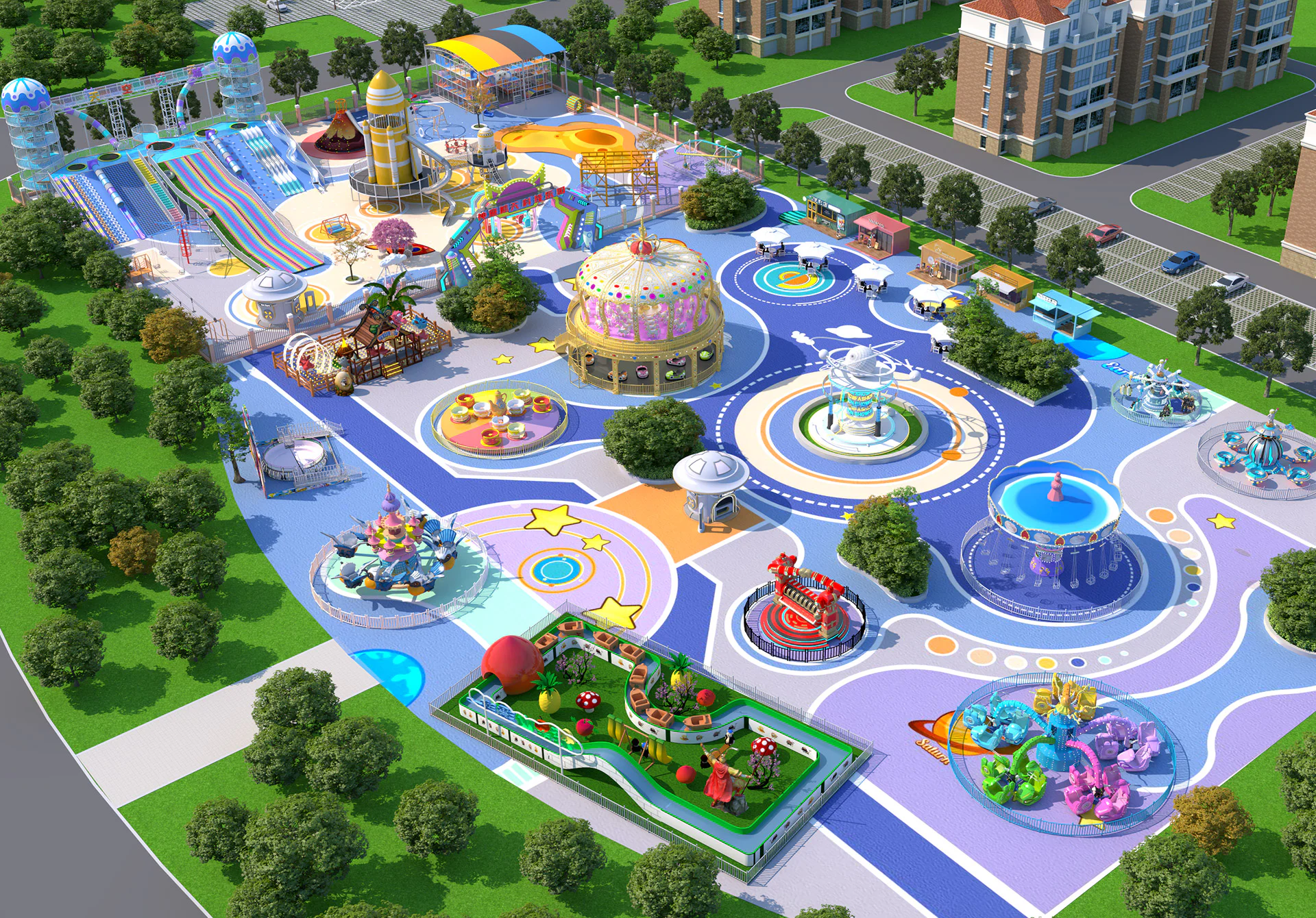
In the global attractions industry, both theme parks and amusement parks are major revenue-generating businesses. However, they do not earn money in the same way.

While both models rely on visitor attendance and entertainment experiences, their revenue structures, pricing strategies, and income diversification levels are fundamentally different.
Understanding how these two business models generate income is essential for investors, operators, and tourism developers who want to evaluate profitability and long-term sustainability.
Quick Overview: Revenue Models Compared
| Revenue Factor | Amusement Park | Theme Park |
|---|---|---|
| Ticket Sales | Primary income source | Important but not dominant |
| Visitor Stay | Short (half-day to 1 day) | Long (1–5 days) |
| Hotels | Rare | Major revenue source |
| Food & Beverage | Moderate | High |
| Merchandise | Limited | Extensive |
| Entertainment Add-ons | Small | Large-scale revenue driver |
| Brand Licensing | Minimal | Significant |
| Overall Revenue Diversity | Low to Medium | High |
1. Ticket Sales: The Foundation of Both Models
Amusement Parks
For most amusement parks, ticket sales are the main revenue source. Income is typically generated through:
- One-day admission tickets
- Ride wristbands
- Seasonal passes
- Group tickets
- Discount promotions
Because visitors usually stay for a shorter time, ticket pricing must remain competitive and accessible.
Theme Parks
Theme parks also rely on ticket sales, but they often use tiered pricing strategies, such as:
- Single-day tickets
- Multi-day passes
- Annual memberships
- VIP experiences
- Fast-track upgrades
However, ticket revenue is only one part of a much larger ecosystem.
2. Visitor Spending: The Key Profit Driver
Amusement Parks
Visitor spending in amusement parks is usually limited to:
- Snacks and fast food
- Soft drinks
- Souvenirs
- Arcade games
- Small add-on experiences
Spending is typically concentrated within a single visit.
Theme Parks
Theme parks significantly increase per-visitor spending by offering:
- Themed restaurants
- Character dining experiences
- Premium food options
- Exclusive merchandise
- Interactive retail stores
- Limited-edition collectibles
- Seasonal event products
Because visitors stay longer, total spending per guest is much higher.
3. Hotels and Accommodation Revenue
Amusement Parks
Most amusement parks do not include hotels. Visitors usually stay off-site, meaning:
- No direct accommodation revenue
- Limited influence on tourism spending beyond the park
Theme Parks
Many theme parks operate as integrated resorts, including:
- On-site hotels
- Luxury resorts
- Budget accommodations
- Vacation packages
Accommodation becomes one of the largest revenue streams, often exceeding ticket sales in mature destinations.
4. Food and Beverage Revenue
Amusement Parks
Food services typically include:
- Fast food stands
- Snack kiosks
- Ice cream shops
- Basic restaurants
These are designed for convenience rather than experience.
Theme Parks
Food and beverage is a major profit center, including:
- Themed restaurants
- Fine dining experiences
- Character breakfasts
- International cuisine
- Specialty cafés
- Seasonal menus
In many theme parks, dining is part of the attraction itself, significantly increasing spending per guest.
5. Merchandise and Retail Sales
Amusement Parks
Retail is usually limited to:
- Generic souvenirs
- T-shirts
- Toys
- Keychains
Merchandise revenue is secondary.
Theme Parks
Retail is a core revenue driver, supported by:
- Intellectual property (IP)-based products
- Exclusive branded merchandise
- Limited-edition items
- Collectibles
- Character-themed goods
- Immersive retail environments
Strong branding allows theme parks to generate high-margin retail revenue.
6. Entertainment and Experience Monetization
Amusement Parks
Entertainment is mostly included in admission:
- Occasional live shows
- Seasonal events
- Basic performances
Monetization opportunities are limited.
Theme Parks
Theme parks monetize entertainment in multiple ways:
- Premium live shows
- Nighttime spectaculars
- Paid VIP seating
- Special seasonal events
- Exclusive experiences
- Behind-the-scenes tours
Entertainment becomes a separate revenue stream, not just a cost center.
7. Brand Licensing and Intellectual Property
Amusement Parks
Most amusement parks do not rely heavily on branding or IP licensing. Their attractions are often generic rides without strong storytelling elements.
Theme Parks
Theme parks often leverage strong intellectual property to generate revenue through:
- Licensing agreements
- Film and media partnerships
- Character branding
- Global merchandise distribution
- Franchise expansions
This allows theme parks to earn money beyond physical visitors.
8. Events and Seasonal Revenue
Amusement Parks
Seasonal revenue typically includes:
- Holiday events
- School trips
- Local festivals
- Summer promotions
These events provide moderate additional income.
Theme Parks
Theme parks maximize seasonal revenue through:
- Halloween festivals
- Winter holiday events
- Cultural celebrations
- Food festivals
- Concerts and performances
- Exclusive ticketed experiences
These events often drive peak-season profitability spikes.
9. Per Capita Revenue Comparison
One of the most important financial metrics is per guest spending.
| Category | Amusement Park | Theme Park |
|---|---|---|
| Average Spend per Guest | Moderate | High |
| Spending Duration | Short | Extended |
| Upsell Opportunities | Limited | Extensive |
| Premium Purchases | Rare | Frequent |
Theme parks consistently outperform amusement parks in per-visitor revenue due to longer stays and diversified spending opportunities.
10. Long-Term Revenue Stability
Amusement Parks
Revenue is often more sensitive to:
- Weather conditions
- Local economy
- Seasonal demand
- Regional competition
This can create fluctuations in annual income.
Theme Parks
Theme parks tend to have more stable long-term revenue due to:
- Year-round tourism appeal
- Multi-day visitation
- Diversified income streams
- Strong brand loyalty
- Resort integration
This makes them more resilient to seasonal downturns.
11. Investment Return Perspective
Amusement Parks
- Lower startup cost
- Faster return on investment (ROI)
- Simpler operations
- Regional market dependency
Theme Parks
- Higher initial investment
- Longer payback period
- Higher long-term revenue potential
- Strong destination tourism appeal
Both models can be profitable depending on execution and market conditions.
Industry Trends Affecting Revenue (2026)
Modern attractions are evolving with new monetization strategies:
- Dynamic ticket pricing
- AI-driven personalization
- Mobile app upselling
- Virtual queue monetization
- Subscription-based annual passes
- Digital merchandise integration
- Smart retail systems
- Data-driven marketing
- Cashless ecosystems
- Experience-based premium upgrades
These innovations increase revenue efficiency for both park types.
Frequently Asked Questions (FAQ)
Why do theme parks generate more revenue than amusement parks?
Theme parks generate more revenue because they offer longer stays, higher visitor spending, hotels, retail, dining, and multiple entertainment-based income streams.
Is ticket sales the main income source for amusement parks?
Yes. In most amusement parks, ticket sales and ride access are the primary revenue drivers, supported by food, games, and merchandise.
Do theme parks rely only on tickets?
No. Theme parks diversify income through hotels, dining, retail, entertainment, events, and licensing, making tickets only one part of the business model.
Which model is more profitable overall?
Theme parks typically have higher long-term revenue potential, while amusement parks often achieve faster ROI due to lower investment and operating costs.
Can amusement parks increase revenue over time?
Yes. Amusement parks can improve revenue by adding themed areas, upgrading attractions, introducing events, and expanding into mixed entertainment experiences.