Bumper cars have remained one of the most beloved and consistently profitable attractions in the amusement industry for over a century. Whether you’re opening a new family

entertainment center (FEC), expanding an existing theme park, or launching a seasonal carnival business, knowing how to purchase bumper cars properly can save you thousands of dollars and years of operational headaches.
This comprehensive guide walks you through every step of the bumper car purchasing process—from defining your needs and choosing the right type to vetting suppliers, understanding costs, and handling installation. By the end, you’ll have a complete roadmap to make a confident, informed purchase.
Step 1: Define Your Business Needs Before You Start Shopping
Before you even search for “bumper cars for sale,” take time to answer these fundamental questions. Your answers will determine every subsequent decision.
Target Audience
- Young children only (ages 3–8) → Mini / kiddie bumper cars with padded interiors and speed limiters
- Teens and adults → Full-sized bumper cars with higher speed and durability
- Mixed family audiences → Mix of sizes, plus 2‑seat models for parent‑child riding
Venue Type
- Permanent indoor amusement park → Ground‑grid or ceiling‑grid systems offer continuous power
- Outdoor plaza or shopping center → Battery‑powered models (no special flooring needed)
- Temporary / seasonal carnival → Portable or inflatable bumper cars that can be moved easily
Space Availability
Each bumper car typically requires 10–15 square meters (100–160 square feet) of arena space. For a small arena accommodating 8–10 cars, you’ll need roughly 100–150 square meters (1,000–1,600 square feet). Measure your available space before contacting any supplier.
Step 2: Understand the Different Types of Bumper Cars
Not all bumper cars are the same. The power delivery system is the most critical distinction, as it determines installation costs, operational flexibility, and long‑term maintenance.
Comparison Table: Bumper Car Types at a Glance
| Type | Power Source | Speed | Arena Requirements | Best For |
|---|---|---|---|---|
| Ceiling‑Grid | Overhead conductive mesh | 6–12 km/h | Specialized ceiling + conductive floor | Large indoor amusement parks |
| Ground‑Grid | Conductive metal floor panels | 8–15 km/h | Specialized conductive flooring | High‑traffic permanent theme parks |
| Battery‑Powered | Internal rechargeable batteries | 8–12 km/h (adjustable) | Any flat smooth surface | Outdoor plazas, malls, temporary setups |
| Portable / Inflatable | Battery or external power | 6–10 km/h | Flat ground; minimal setup | Carnivals, fairs, rental businesses |
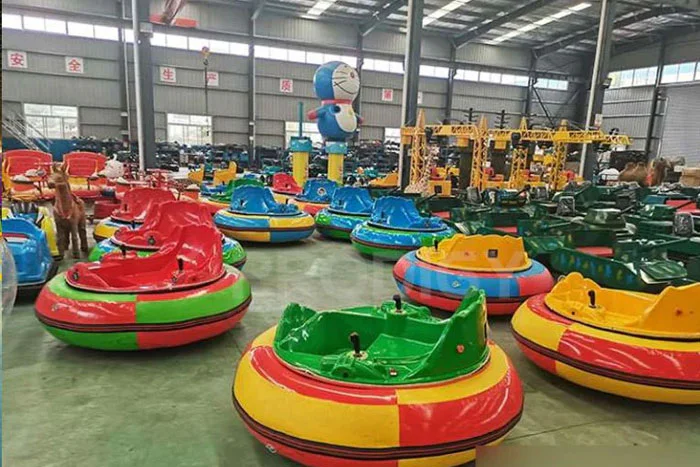
Detailed Breakdown
Ceiling‑Grid Bumper Cars (Sky‑Net)
These classic bumper cars receive power through a pole that contacts an overhead conductive mesh. They offer stable continuous power but require specialized ceiling installation, making them best for large, permanent indoor parks.
Ground‑Grid Bumper Cars (Floor Pick‑Up)
Power comes from alternating metal strips embedded in the arena floor. These models deliver faster speeds (up to 15 km/h) and longer operational lifespans, but installation and maintenance costs are high. Ideal for theme parks with permanent installations.
Battery‑Powered Bumper Cars
The fastest‑growing segment in 2026. These models run on internal rechargeable batteries (often LiFePO4 or sealed lead‑acid) and require no special flooring or ceiling—just any flat, smooth surface. While battery replacement is an ongoing cost, the savings in infrastructure make them increasingly popular.
Portable / Inflatable Bumper Cars
Lightweight, mobile models designed for temporary events and rental businesses. They are easy to set up and transport but less durable than fixed models. Best for carnivals, exhibitions, and mall pop‑up events.
Step 3: Know the Price Ranges and Total Investment Costs
Pricing varies significantly based on type, size, features, and quantity. Below are current market ranges for 2026.
Per‑Unit Pricing (New Bumper Cars)
| Type | Price Range (USD per car) |
|---|---|
| Mini / Kids‘ bumper cars | $400 – $1,200 |
| Standard battery‑powered | $1,500 – $5,500 |
| Ground‑grid electric | $2,000 – $4,000 |
| Ceiling‑grid electric | $2,500 – $4,500 |
| Commercial electric (premium) | $3,000 – $15,000+ |
| Luxury adult bumper car | $3,500 – $6,000 |
Sources: ANCHI, HOTFUN, MAKERIDES, HUAQIN
Bulk Pricing Example
For a typical order of 8 bumper cars, total equipment cost ranges from $6,400 to $12,000, depending on specifications. Many manufacturers offer volume discounts of 3–5% for larger orders.

Hidden Costs: The Full Investment Picture
The vehicles themselves are only part of the investment. You must also budget for:
| Expense | Estimated Cost (USD) |
|---|---|
| Arena floor installation (ground‑grid systems) | $30,000 – $60,000 |
| Complete arena setup (400㎡ with 20 cars) | ~$45,000 |
| Batteries & chargers (for 10–12 cars) | $5,000 – $10,000 |
| Spare parts & annual maintenance | 5–10% of purchase cost |
| Staff training & operations (annual) | $10,000 – $20,000 |
| Insurance & licensing | Varies by region |
Source: MAKERIDES, DINIS Park Solutions
Tip: Battery‑powered cars require less installation investment but have ongoing battery replacement costs (every 1.5–2 years). Ground‑grid systems have higher upfront costs but lower long‑term charging expenses.
Step 4: Evaluate Supplier Quality and Safety Certifications
Purchasing bumper cars is not like buying off‑the‑shelf consumer products. Safety is paramount, and supplier reliability directly affects your business’s liability and uptime.
Required Safety Certifications
Always verify that your chosen supplier provides:
| Certification | Region / Scope |
|---|---|
| CE | European Union safety standards |
| ASTM F2291 | US amusement ride design standards (includes bumper cars) |
| ISO 9001 | International quality management |
| EN 13814 | European amusement ride safety standard |
| GB 8408 | Chinese amusement ride safety standard |
| CCC | China export certification |
Sources: HUAQIN, ACCIO, ASTM International
Red flag: Any supplier who cannot provide verifiable, current certificates. Always demand certificates with QR traceability codes.
Supplier Vetting Checklist
Before committing to a purchase:
- Verify business license and export records
- Visit the factory or request a virtual factory tour
- Ask for sample products to test in operation
- Check production capacity and lead times
- Confirm warranty period (typically 12–24 months on key components)
- Request spare parts availability and pricing
- Read customer reviews and ask for references
Top Bumper Car Manufacturers (2026)
| Manufacturer | Origin | Strengths |
|---|---|---|
| Zamperla | Italy | Large‑scale family rides, global support network |
| Bertazzon | Italy | Italian craftsmanship, durable classic designs |
| Chance Rides | USA | North American support, reliable engineering |
| SBF Visa Group | Italy | Compact, modular designs for smaller footprints |
| HUAQIN / ANCHI | China | Competitive pricing, extensive customization |
| HOTFUN | China | CE/ISO/ASTM compliance, export expertise |
Source: HUAQIN Manufacturer Guide
Step 5: Choose Between New, Used, or Refurbished Bumper Cars
New Bumper Cars
- Pros: Full warranty, latest safety features, customization available, predictable lifespan (5–10+ years with proper maintenance)
- Cons: Highest upfront cost
- Best for: Permanent installations, businesses with adequate capital, those needing specific theming
Used / Refurbished Bumper Cars
- Pros: Lower initial cost, immediate availability
- Cons: Unknown maintenance history, may not meet current safety standards, limited or no warranty
- Best for: Startups with tight budgets, seasonal rental businesses
Where to find used bumper cars:
- eBay, Craigslist, Facebook Marketplace
- Government auctions (AuctionZip, Proxibid)
- Local carnival suppliers and amusement park supply stores
When buying used, always:
- Conduct a thorough visual inspection (rust, cracks, wear)
- Test electrical and mechanical components
- Verify safety compliance with local regulations
- Research market value before negotiating
- Ask for maintenance records
Source: XJD Used Bumper Car Guide
Step 6: Plan Your Arena and Installation
The arena is just as important as the cars themselves.
Space Requirements
| Arena Size | Recommended Car Count | Space per Car |
|---|---|---|
| Small (100–150㎡) | 6–10 cars | 10–15㎡ |
| Medium (200–400㎡) | 12–20 cars | 10–15㎡ |
| Large (400+㎡) | 20+ cars | 10–15㎡ |
Source: ANCHI Arena Design Guide
Installation Requirements by Type
| System | Floor Requirement | Ceiling Requirement | Complexity |
|---|---|---|---|
| Battery‑Powered | Any flat, smooth surface (concrete, tile, marble) | None | Low (plug & play) |
| Ground‑Grid | Specialized conductive metal floor panels | None | High (professional installation required) |
| Ceiling‑Grid | Conductive floor | Overhead conductive mesh | High |
Essential Arena Features
- Padded perimeter walls (minimum 4–6 feet high)
- Clear entrance and exit signage
- Emergency stop controls accessible to attendants
- Proper lighting (avoid glare on floor surface)
- At least 2 attendants during operation
Source: XJD Arena Building Guide
Step 7: Understand Warranty, Maintenance, and Ongoing Costs
Typical Warranty Coverage
- 12–24 months on key components (motor, controller, frame)
- Spare parts availability guaranteed for at least 3–5 years
Daily / Weekly Maintenance Checklist
- Inspect bumpers for damage or wear
- Check battery charge levels and connections (battery models)
- Test steering, brakes, and acceleration on each car
- Wipe down cars and clean debris from arena floor
- Inspect floor grid for loose sections (ground‑grid systems)
Battery Replacement Costs (Battery‑Powered Models)
Batteries typically last 1–3 years depending on usage and quality. Budget several hundred dollars per battery for replacement.
Annual Maintenance Budget
Allocate 5–10% of your original purchase cost annually for ongoing maintenance and spare parts.
Step 8: Negotiate and Close the Purchase
Key Negotiation Points
- Volume discounts – Most manufacturers offer 3–5% off for orders of 8+ units
- Shipping terms – Clarify who pays for freight, insurance, and customs clearance
- Installation support – Ask if the supplier provides on‑site installation or detailed manuals
- Spare parts kit – Negotiate a discounted starter kit of common replacement parts
- Payment terms – Typical terms are 30–50% deposit, balance before shipment
Payment Safety Tips
- Use secure payment methods (letter of credit for international orders)
- Never pay 100% upfront
- Get everything in writing: specifications, delivery date, warranty terms, and return policy
Step 9: Plan for ROI and Profitability
Bumper cars are consistently among the highest‑ROI amusement attractions due to their universal appeal and low labor requirements.
Sample Revenue Projection (10‑car arena)
| Metric | Value |
|---|---|
| Ticket price per ride | $4 – $6 |
| Ride duration | 3–5 minutes |
| Sessions per car per hour | 10–12 |
| Hourly revenue (10 cars) | $400 – $720 |
| Daily revenue (6 peak hours) | $2,400 – $4,320 |
| Monthly gross revenue (25 days) | $60,000 – $108,000 |
Payback Period
Most operators recover their investment in 6–12 months, depending on location and foot traffic. For premium battery‑powered cars priced at $3,000–$5,000 per unit, equipment cost can be recovered in just 10–15 peak operating days.
Common Mistakes to Avoid When Purchasing Bumper Cars
❌ Buying without verifying safety certifications – Liable for accidents, may fail inspections
❌ Underestimating arena installation costs – Floor systems can cost as much as the cars themselves
❌ Choosing the wrong power system for your venue – A ground‑grid system in a temporary location is a disaster
❌ Ignoring after‑sales support – A cheap supplier with no spare parts will cost you more in downtime
❌ Skipping the factory visit or virtual audit – You need to see quality control in action
❌ Forgetting to budget for ongoing maintenance – Batteries, tires, and bumpers all wear out
Frequently Asked Questions (FAQs)
How much does it cost to purchase bumper cars?
Prices range from $400 for basic kids‘ models to $15,000+ for premium commercial electric cars. A typical commercial bumper car costs $1,500–$5,500 per unit.
Do I need special flooring for bumper cars?
Battery‑powered models require only any flat, smooth surface. Ground‑grid and ceiling‑grid systems require specialized conductive flooring or ceiling installation.
How many bumper cars do I need for a small venue?
For a small arena of 100–150 square meters, 6–10 cars is typical. Ensure at least 10–15 square meters per car for safe operation.
What safety certifications should I look for?
At minimum, verify CE certification for Europe, ASTM compliance for the US, and ISO 9001 for quality management. For exports from China, also require GB 8408 or CCC.
Can I buy used bumper cars?
Yes, but inspect thoroughly, test all mechanical systems, and verify safety compliance. Used cars are best for startups or seasonal businesses with tight budgets.
How long do commercial bumper cars last?
With proper maintenance, commercial‑grade bumper cars last 5–10 years or more. Battery‑powered models require battery replacement every 1.5–3 years.
Final Checklist: Before You Purchase Bumper Cars
- Defined target audience and venue type
- Measured available space (allow 10–15㎡ per car)
- Chosen power system (battery, ground‑grid, or ceiling‑grid)
- Set realistic budget (including arena installation and hidden costs)
- Researched at least 3 reputable suppliers
- Verified safety certifications (CE, ASTM, ISO, etc.)
- Requested formal quotes with all costs included
- Asked for customer references or case studies
- Clarified warranty terms and spare parts availability
- Planned for ongoing maintenance and battery replacement (if applicable)
- For used cars: conducted thorough inspection and tested operation
Conclusion
Knowing how to purchase bumper cars properly transforms a potentially overwhelming process into a straightforward investment. The key is to start with your venue and audience, choose the right power system for your needs, vet suppliers thoroughly for safety certifications, and budget for both upfront costs and long‑term maintenance.
Battery‑powered models dominate the 2026 market for their flexibility and lower installation costs, while ground‑grid systems remain the gold standard for permanent, high‑throughput indoor venues. Whatever you choose, remember: quality matters. A cheap bumper car with no safety certification or spare parts support will cost you far more in downtime and liability than the money you saved upfront.
Take your time, ask the right questions, and invest in equipment that will keep guests smiling—and coming back—for years to come.