


Smart ride selection can transform a modest investment into a thriving attraction. Small and medium parks serve a distinct market segment—one that requires thoughtful curation rather than sheer scale. While major theme parks compete on record-breaking coasters and blockbuster IPs, smaller venues succeed by getting the fundamentals right: reliable operations, family-friendly experiences, and sustainable returns.
The global amusement park market is projected to reach 84.08billionby2030witha12.946.8 billion in 2025 to $102.8 billion by 2032. Small and medium parks are ideally positioned to capture this growth by offering accessible, high-value experiences that larger competitors often overlook.
This guide presents a practical framework for selecting rides that balance investment, space, appeal, and long-term profitability for small and medium amusement parks.
Understanding Your Park’s Core Audience
Before reviewing ride types, define who you are serving. Small and medium parks typically serve three overlapping audience segments.
Families with young children (ages 3–10)—the largest segment for most small parks. These guests seek rides children can enjoy with parents, prioritize safety and cleanliness, and often have shorter dwell times. They purchase food, drinks, and merchandise, making them the most valuable per-party segment overall.
Tweens and teens (ages 11–16)—a smaller but critical segment that keeps parks “cool.” They seek mild thrill experiences moderately above kiddie rides but below extreme coasters, often visit in groups, and drive social media visibility through tagged posts and shared content.
Adult chaperones and seniors—often overlooked but essential for per-capita spending. They rarely ride themselves but appreciate comfortable seating areas, shade, and visual spectacle—well-lit carousels, brightly colored swing rides, and fountains that make excellent photo backdrops.
The most successful small parks design a ride portfolio that serves all three simultaneously, rather than forcing families to split up across distant zones.
Top Ride Categories for Small and Medium Parks
Based on operational data from hundreds of small and medium parks worldwide, the following ride categories consistently deliver the strongest combination of investment efficiency and guest satisfaction.
Family Coasters and Compact Thrill Rides
A signature thrill attraction does not require a massive footprint or multi-million-dollar investment. Compact coasters and junior thrill rides deliver excitement in a fraction of the space.
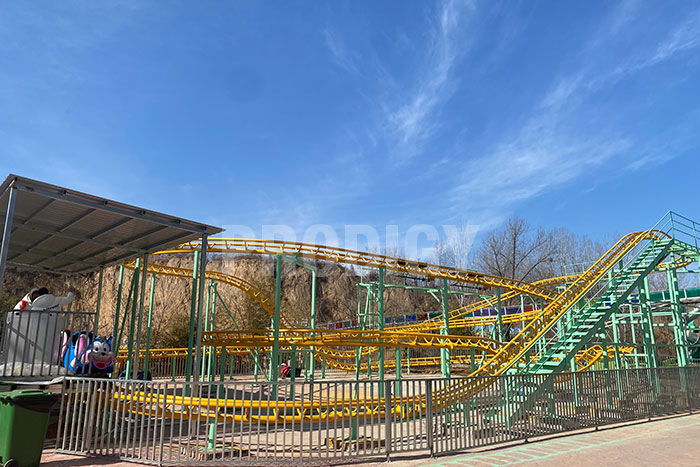
The Zamperla Junior Shuttle Coaster family, for instance, accommodates riders starting at 90 cm (35 inches) when accompanied. The classic family coaster runs forwards and backwards along a 266-meter track, while the spinning version offers an unpredictable ride experience on the same compact layout. Zamperla’s booster wheel launch system combines rapid acceleration with electrical efficiency—no gearboxes required, and launch unit replacement takes minutes instead of hours.
Skyline Attractions’ Orbit II is another excellent compact option, redesigned for smooth and reliable operation at any park or FEC budget. With an inclusive height requirement and beginner thrill level, it suits families seeking moderate excitement.
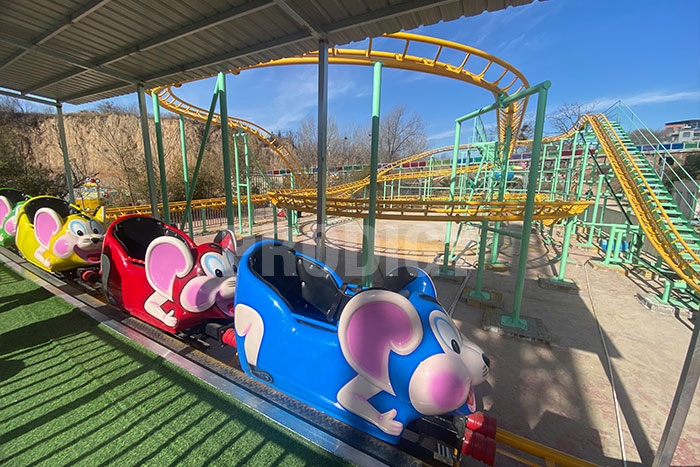
The Wacky Worm Coaster remains a global bestseller for introducing children to roller coasters. Its bright worm-shaped train, smooth curves, and lively design make it a must-have for any family zone.
Recommended for: Parks with available space of 1,500–3,000 sq ft, targeting families with children ages 6–12 seeking their “first coaster” experience.
Estimated investment range: 50,000–250,000 depending on manufacturer, customization, and shipping.
Swing Rides and Pendulum Attractions
Swing rides and mini pendulum attractions offer affordable thrill-density in a compact envelope.
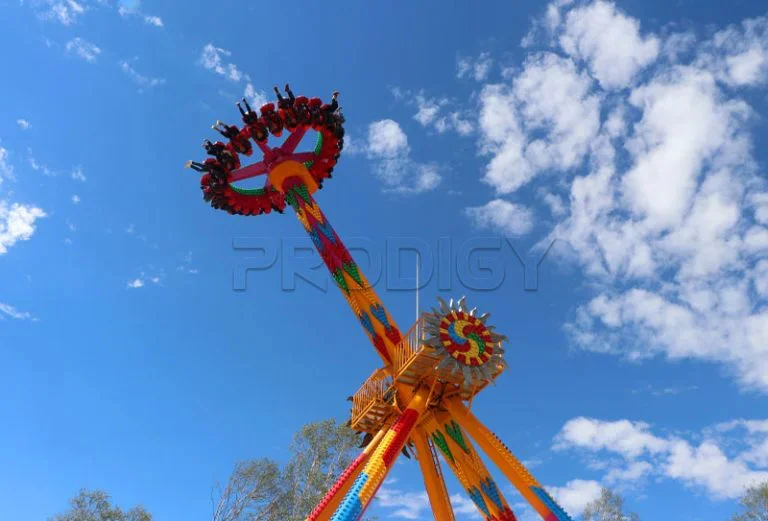
The mini pendulum ride from Dinis Thrill Rides delivers a gentle swinging experience ideal for kids. It is compact, colorful, and easy to maintain—perfect for parks with limited space but big ambitions. The classic family swing ride gives riders a flying sensation as chairs gently spin around the central tower, a joyful experience enjoyed by both kids and parents together.
For parks seeking a pendulum experience with a themed twist, the Mini Frisbee Ride accommodates five passengers per cycle on a 7×7 meter footprint. Riders swing back and forth in a thrilling arc, enjoying weightlessness without the intimidating scale of larger pendulum rides. Its dinosaur-inspired theme adds storytelling potential.
Swing rides typically occupy 15–25 feet in diameter and can be installed indoors or outdoors with standard concrete foundations. Throughput ranges from 200 to 400 riders per hour, making them reliable mid-level revenue generators.
Recommended for: Parks that need a visible “signature” attraction without the footprint or cost of a full roller coaster.
Estimated investment range: 20,000–80,000.
Carousels and Merry-Go-Rounds
Carousels are the most dependable profit centers in any small park portfolio. They appeal across all ages, operate with simple mechanics, and serve as visual anchors that draw guests from across the venue.

Small carousels (8–16 seats) with 3–6 meter diameters fit easily into indoor malls and compact outdoor areas. Their LED lighting and synchronized music create a “fairy-tale” atmosphere that encourages social media check-ins. A 24-seat luxury carousel can be purchased for approximately $5,000 on the lower end, while larger models command higher pricing based on capacity and theming.
Kiddie carousels specifically target the 2–8 age range, making them excellent fits for dedicated children’s zones. For parks pursuing higher capacity, certain 24-seat models can serve up to 288 riders per hour, generating substantial daily revenue even at modest ticket prices.
Recommended for: Every small and medium park. The carousel is the one ride category that no operator regrets purchasing.
Estimated investment range: 10,000–120,000, with premium custom models reaching higher.
Bumper Cars
Bumper cars consistently rank among the most profitable interactive attractions for small parks. They attract both children and adults, offer strong repeat play value, and generate stable daily income in malls, plazas, and entertainment centers.

A set of 7–8 bumper cars can be purchased for under $8,000, making bumper cars one of the most accessible high-demand rides for operators with limited starting budgets. The structure is mature, durable, and easy to maintain, with replacement parts widely available from multiple suppliers.
For indoor FECs, bumper cars integrate naturally with existing food and beverage zones, as guests often purchase concessions before or after riding.
Recommended for: Parks with at least 500 sq ft of floor space, particularly indoor venues and covered outdoor plazas.
Estimated investment range: 7,000–30,000 depending on vehicle count and power system (floor grid vs. battery).
Trackless Trains and People Movers
Trackless trains serve dual functions: they are paid attractions in their own right and internal transportation systems that move guests—and their wallets—to underutilized zones of the park.
A mini trackless train carries 20–30 passengers per ride and performs exceptionally well during peak hours. These trains also help guide foot traffic throughout the venue, increasing exposure to retail and dining areas. Modern battery-electric models operate quietly, emit zero fumes, and can run full days on a single charge.
For parks with separate zones (e.g., a kiddie area, a thrill zone, and a food court), a trackless train can boost secondary revenue by 15–25% by redistributing crowd flow.
Recommended for: Larger small parks (2+ acres) with distinct zones, or any venue where walking distances exceed 3–5 minutes.
Estimated investment range: 15,000–60,000.
Kiddie Rides and Interactive Attractions
A robust collection of kiddie rides forms the foundation of any family-oriented small park. Parents choose parks based on what their youngest children can enjoy, not necessarily on how thrilling the coasters are.
Top-performing kiddie rides include mini self-control planes (riders manually control up-and-down movement, creating a “pilot-style” experience that increases replay value significantly), children’s excavators (built with high-strength steel structures and realistic mechanical operation, steady demand with minimal seasonality), teacup spinners (interactive fun as families spin at their own pace, available with custom colors, LED lights, and music), and mini Ferris wheels and mini pirate ships (scaled-down versions of classic attractions, accommodating 12–16 riders per cycle in just 20–30 sq m).
For parks seeking extreme budget efficiency, inflatable castles offer the lowest entry barrier—from a few thousand dollars up to roughly 10,000.Theyareportable,easytostore,andgeneratehighturnoverduringweekendsandholidayswithhourlypricingof3–8 per child.
Interactive “phygital” rides that blend physical motion with digital engagement are increasingly important. By 2026–2027, family entertainment centers that fail to offer some degree of interactivity risk losing the digital-native generation to competitors with screens, scoring systems, and gamified experiences.
Recommended for: All small parks, but especially those targeting families with children under 10. A minimum of 4–6 kiddie rides is recommended for standalone FECs.
Estimated investment range: 2,000–25,000 per ride, with most under $8,000 per unit.
Pirate Ships
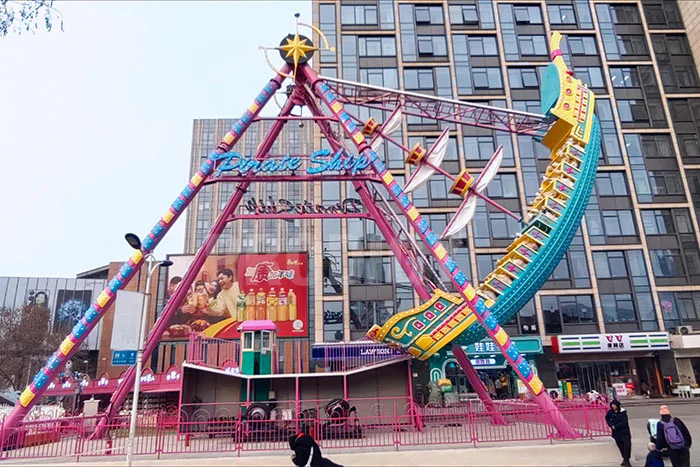
The pirate ship—a pendulum-style swinging ride—is universally recognized and beloved. Mini pirate ship versions require only 20–30 square meters and deliver mild thrills within a safe range, accommodating 12–16 riders per cycle for efficient passenger turnover.
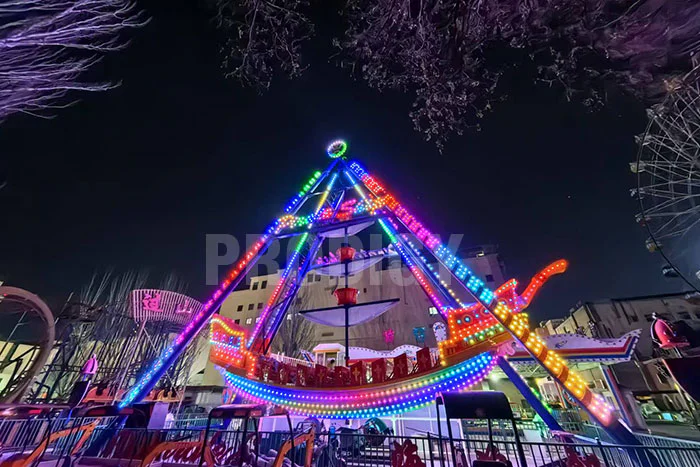
SBF/Visa Group’s portable pirate ship seats 30–40 adults per cycle, features a simple drive system, and can be assembled or disassembled in just three hours, making it suitable for seasonal or traveling operations. The Italian manufacturer, operating since 1952 with over 350 ride types in its portfolio, emphasizes affordable pricing without compromising quality.
Recommended for: Parks seeking a visual spectacle that draws crowds from across the venue.
Estimated investment range: 25,000–100,000.
Small Drop Towers
Drop towers offer high thrill-density in an exceptionally compact footprint. A mini drop tower introduces children to vertical motion safely, with a mini free-fall sensation that creates laughter and courage in equal measure. Rides 4-U’s mini drop tower has become a proven favorite among North American buyers, with a lot of action being the key to its success.

Small drop towers typically occupy only 10–15 feet in diameter but rise 30–50 feet high, creating significant skyline presence relative to their ground footprint.
Recommended for: Parks that want a “thrill anchor” without the space or budget for a full coaster.
Estimated investment range: 30,000–90,000.
Compact Spinning Coasters
The spinning coaster category offers the closest experience to a traditional roller coaster within a truly compact footprint. SBF/Visa Group’s Compact Spinning Coaster has been sold to multiple parks across North America, with an updated portable version showcased at IAAPA featuring improvements to its racking system for faster, easier setup.
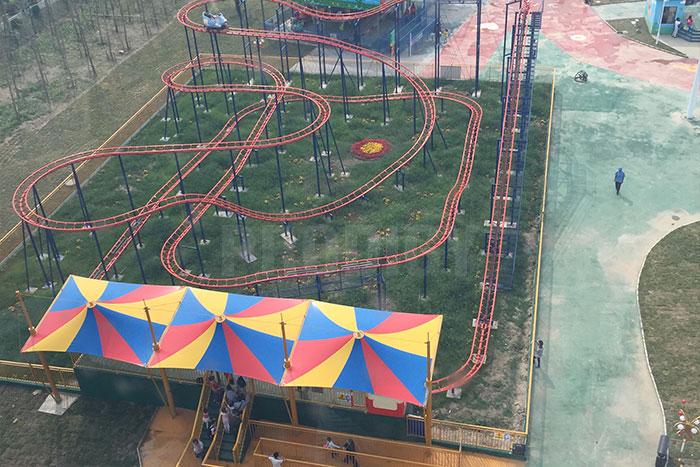
Some versions are available as both permanent park models and portable units that can be assembled in three to four days.
Recommended for: Parks with at least 2,000 sq ft of available space seeking a true “coaster experience.”
Estimated investment range: 150,000–400,000.
Investment and ROI Considerations
Understanding Total Cost of Ownership (TCO)
The purchase price is only the beginning. Smart buyers calculate Total Cost of Ownership over 10 years, including shipping and logistics, foundation work and electrical connections, annual operating expenses (energy, inspections, staff training), routine maintenance and guaranteed spare parts availability, and insurance premiums.
For example, a medium carousel priced at 60,000–150,000 can typically recoup its investment in 12–18 months under normal operation. Amusement parks generate net profit margins between 10% and 25% in most operating scenarios, with the best-run parks pushing well beyond that. The small ride category globally is projected to grow at a 5.3% CAGR through 2032, indicating sustained demand.
Maintenance costs vary dramatically based on equipment quality and manufacturer support. Rides from established manufacturers with documented quality control and corrosion-resistant materials will have significantly lower lifetime maintenance costs than cheaper alternatives.
Power and Energy Efficiency
In 2026, energy efficiency directly impacts profitability. LED lighting systems consume up to 80% less energy than traditional lighting while offering programmable color patterns and longer lifespans. Modern electric motors with variable frequency drives reduce power consumption during low-demand periods.
When comparing ride proposals, request an energy consumption profile (kWh per ride cycle). Differences between similar models can exceed 200–300% over a decade of operation.
Staffing and Operating Costs
A typical ride requires 2–3 operators during peak hours. Other ongoing costs include daily inspections, weekly cleaning, monthly mechanical checks, quarterly restraint mechanism inspections, and annual comprehensive service. Rides with simpler mechanical systems (carousels, trackless trains) have lower staffing and maintenance requirements than complex thrill rides.
Selecting the Right Manufacturer
The ride manufacturer you choose is as important as the rides themselves. For small and medium parks, look for the following qualifications.
Safety certifications and standards compliance should include CE for European markets, ASTM F2291 for North America, EN 13814 for Europe, ISO 9001 for quality management, and TÜV third-party inspection where required. Request documentation of type-test certificates, structural calculations, maintenance schedules, and non-destructive testing records.
Compact footprint expertise is especially valuable for small and medium parks. Manufacturers that specialize in compact designs allow you to maximize attraction density on limited land.
Affordable price points with transparent quoting distinguish from luxury manufacturers. SBF-Visa Group explicitly guarantees affordable pricing without compromising quality. Beware of low-ball quotes that omit shipping, installation supervision, certification fees, or spare parts provision.
After-sales support and spare parts availability should include guaranteed parts availability for 5+ years, installation supervision, operator and maintenance training, remote diagnostic capabilities, and responsive technical support.
International shipping and logistics experience matters greatly. Established manufacturers manage customs clearance, arrange freight, and coordinate on-site delivery across multiple regions.
On-time delivery rate indicates reliability. Top performers exceed 95% on-time delivery.
Notable Manufacturers for Small and Medium Parks
SBF-Visa Group (Italy)—operating since 1952 with over 350 ride types, offering everything from compact spinning coasters to kiddie wheels and pirate ships. Strong reputation for affordable pricing across children‘s, family, and spectacular ride categories.
Zamperla (Italy)—renowned for family-friendly innovations including the Junior Shuttle coaster family, Magic Bikes XL (48-passenger capacity), Go Go Bounze 8.4, and Speedway 8 compact racing experience (384 riders per hour on a 12×6.5m base).
Dinis Thrill Rides—specializes in moderate thrill rides for small and medium parks, offering Wacky Worm Coasters, pendulum rides, family swing rides, and spinning tea cups for indoor and outdoor venues.
Rides 4-U (USA)—distributor representing SBF/Visa and KMG, maintaining U.S.-based spare parts inventory in New Jersey for quick fulfillment. Specializes in compact spinning coasters, mini drop towers, and Zero Gravity attractions.
Modern Amusement Rides—global supplier with over 20 years experience, offering factory-direct pricing, customization options, and one-stop services including free quotations, site planning, logistics, on-site installation guidance, and 24/7 after-sales support.
Step-by-Step Ride Selection Checklist for Small and Medium Parks
Before investing, work through the following checklist systematically.
Pre-Selection:
- Measure your venue’s available space, including clearance zones and ADA accessibility
- Estimate peak-hour guest volume—this determines required ride throughput
- Define your primary target audience and secondary segments
- Set a realistic budget covering purchase, shipping, installation, and first-year operating costs
Ride Evaluation:
- Match each ride type to your space constraints and guest demographics
- Verify safety certifications (CE, ASTM, EN 13814, etc.)
- Assess manufacturer credentials, years in business, export experience, and client references
- Request a TCO calculation from each supplier, broken down by purchase, shipping, installation, and 10-year maintenance
Supplier Comparison:
- Request itemized pricing showing what is included (ride mechanism, electrical systems, theming, shipping, training)
- Compare warranty terms—industry standard is 12 months mechanical / 6 months electrical
- Verify spare parts availability guarantee for at least 5 years
- Check on-time delivery rate and response time metrics
- Visit existing installations if possible, or speak to current owners
Post-Purchase:
- Plan foundation work and electrical connections to manufacturer specifications
- Schedule on-site installation supervision from the manufacturer
- Complete operator and maintenance training before opening
- Establish preventive maintenance calendar following manufacturer guidelines
Emerging Trends for Small and Medium Parks (2026 and Beyond)
Several trends are reshaping ride selection for smaller venues.
“Phygital” interactive experiences combine physical motion with digital gameplay. Small parks that integrate interactive scoring systems, AR elements, or gamified ride experiences appeal strongly to digital-native younger generations who expect engagement beyond passive rides.
IP-driven theming is increasingly accessible for smaller operators. Custom decals, branded color schemes, and themed vehicle designs can be implemented at moderate cost, creating differentiation from generic attractions.
Sustainability and eco-friendly engineering include energy-efficient LED lighting, water-based paints, and low-power motor systems. Parks that promote green credentials often qualify for incentives and appeal to environmentally conscious families.
Portable and seasonal ride options offer flexibility for smaller operators with fluctuating demand. SBF/Visa’s portable spinning coaster and pirate ship can be assembled or disassembled in hours, allowing parks to rotate attractions seasonally.
For small to medium-sized parks, the most practical upgrade path is to start with a reliable core portfolio of 5–8 high-ROI rides (carousel, swing ride, bumper cars, family coaster, trackless train) and add signature thrill elements in Year 2 or 3 after proving cash flow.
“Sportainment” and competitive social gaming represent the next frontier for indoor FECs, moving away from children-only play zones toward immersive, competitive, physically engaging experiences designed for all age groups.
Conclusion
Small and medium amusement parks succeed not by competing on size, but by competing on smart choices. The right ride portfolio—balanced across family coasters, swing rides, carousels, bumper cars, trackless trains, kiddie attractions, pirate ships, drop towers, and spinning coasters—can deliver exceptional guest satisfaction and reliable financial returns without requiring the land or capital of a major theme park.
By focusing on compact footprints, proven ride types, quality manufacturing partners, and Total Cost of Ownership, small park operators can thrive in the growing global amusement market. The industry’s projected growth to $84 billion by 2030 creates real opportunity for well-planned, well-executed small and medium parks.
Start smart, think long-term, and build a park that families return to year after year. Your guests do not need the tallest coaster in the world—they need a clean, safe, fun environment where everyone can ride together. That is the formula that has built the world‘s most successful small parks, and it is a formula that works.


